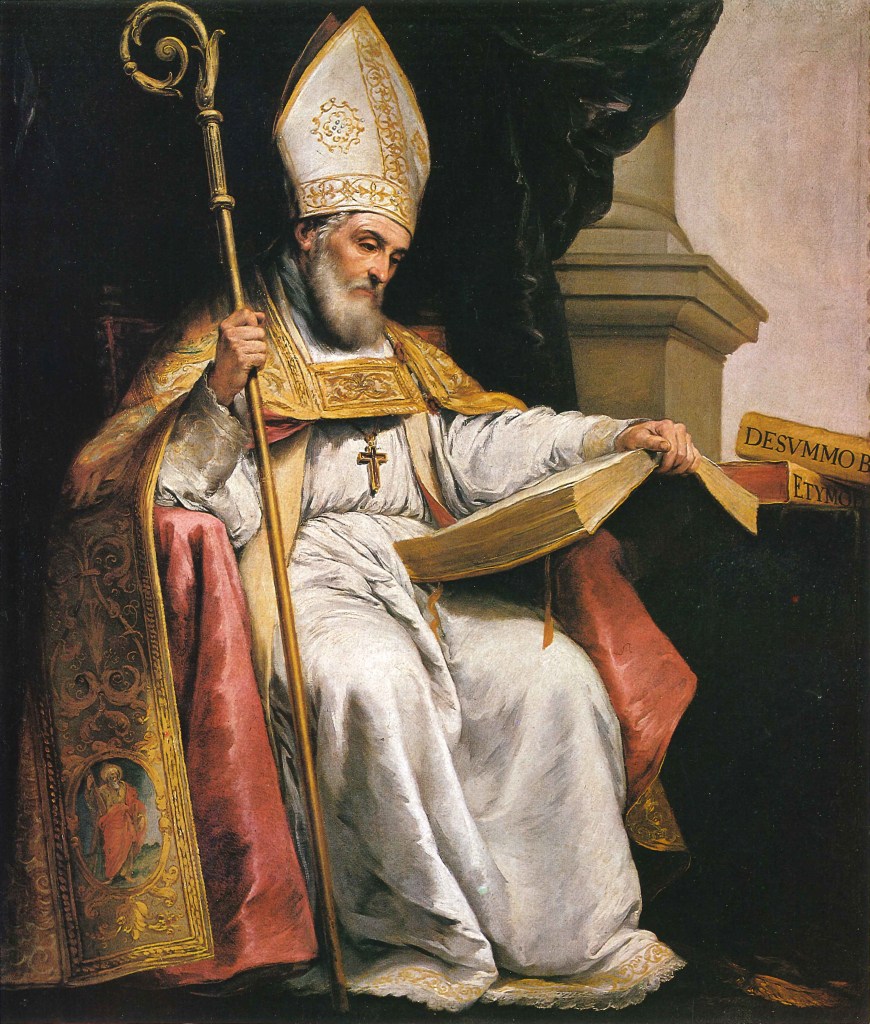
Today is the Feast of Saint Isidore of Seville (c. 560 – 4 April 636) was a Hispano-Roman scholar, theologian, and archbishop of Seville. The Roman Martyrology tells us that he “shed lustre on his country by his zeal for the Catholic faith”, while the 19th-century historian Montalembert described him as “the last scholar of the ancient world”.
Isidore was the first Christian writer to try to compile a summa of universal knowledge, in his most important work, the Etymologiae. This encyclopaedia formed a huge compilation of 448 chapters in 20 volumes, and it is these books that Murillo depicts in this majestic image of the Saint, commissioned for Seville Cathedral by the Archdeacon of Carmona, Juan de Federigui in 1655.
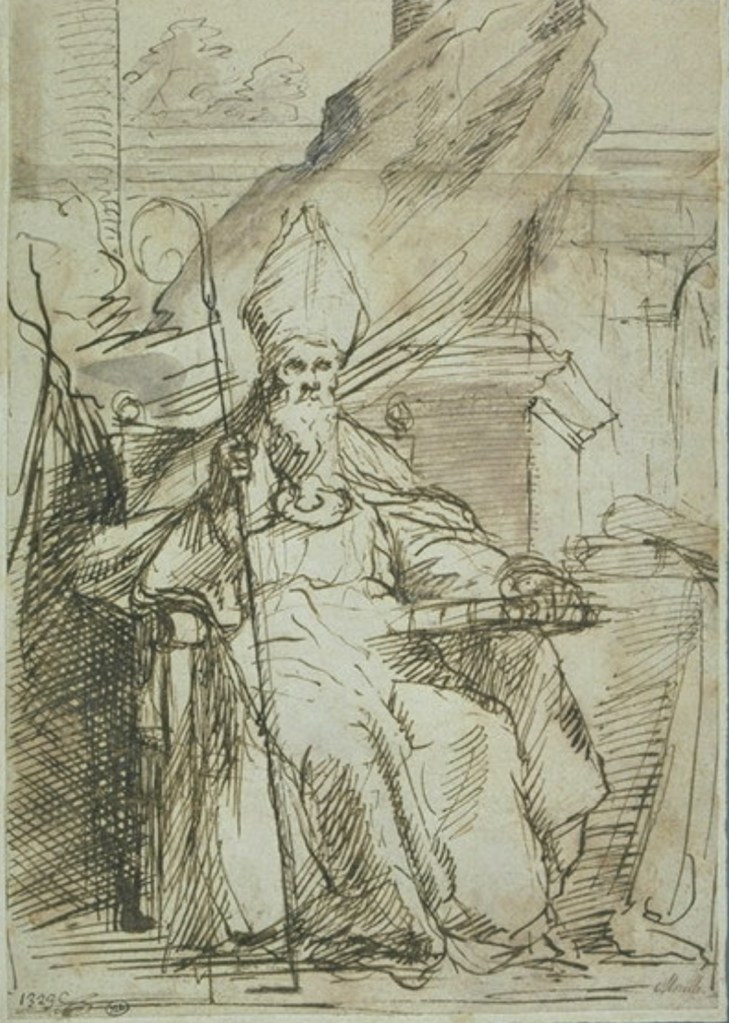
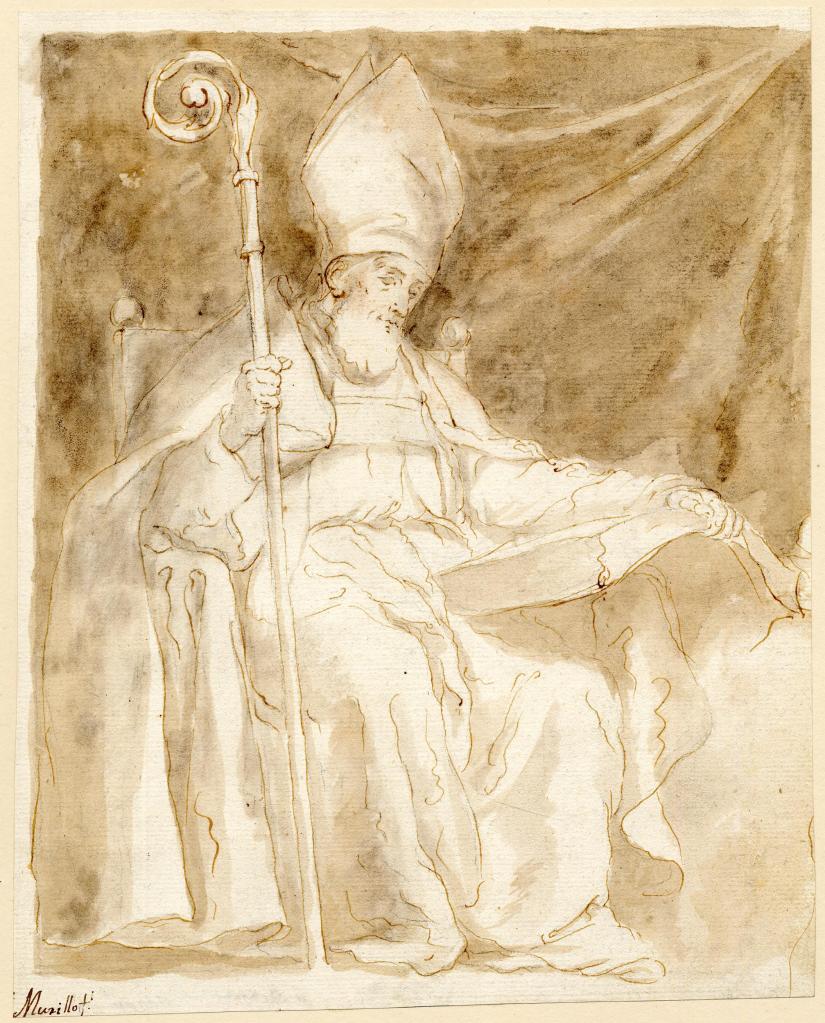
We are fortunate to also have these two preparatory drawings for the painting. The first in collection of the Louvre executed in pen, ink and wash shows the saint looking toward the viewer with a curtain, architectural details and book resting on a table behind. The second in the British Museum is executed predominately with wash and shows the saint exactly as he appears in the painting, reading the open book that rests on his knee. There are no background details other than a curtain. The changes expressed through these studies in different media offer a revealing insight into Murillo’s use of drawing as a means of working out his compositions.

