Spain ‘falls back in love’ with Baroque polychromed sculpture

A headline in The Times newspaper recently claimed ‘Spain falls back in love’ with Baroque polychromed sculpture, citing a number of spectacular exhibitions that can currently be seen in the cities of Valladolid and Madrid. I thought we might therefore spend some time looking at this phenomenon and the artists and artworks from seventeenth century Spain that exerted such extraordinary power on audiences both then and today.

I’m beginning with a post devoted to the artist that I believe was the greatest proponent of this art-form, the Andalusian sculptor Juan Martínez Montañés (1568 – 1649). Montañés is currently the subject of a show in Valladolid cathedral, where his work is displayed alongside that of his Galician contemporary Gregorio Fernández (1576-1636).

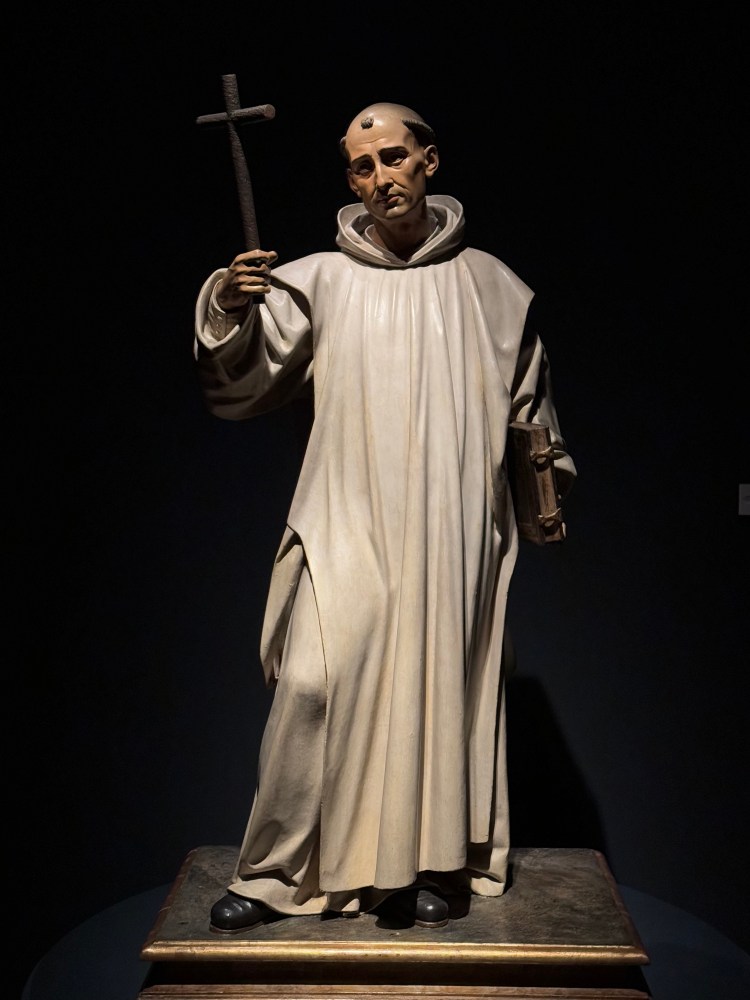
For the me the highlight of the Valladolid show is this portrayal of Saint Bruno, the austere founder of the Carthusian order. A work I have seen many time before in Seville, yet here in Valladolid it is placed in a darkened chapel where the Saint’s monumental white robes and the stark realism of his gaunt features leave a lasting impression on the viewer of this powerhouse of western monasticism.
The raw emotion of Gregorio Fernández’s Recumbent Christs

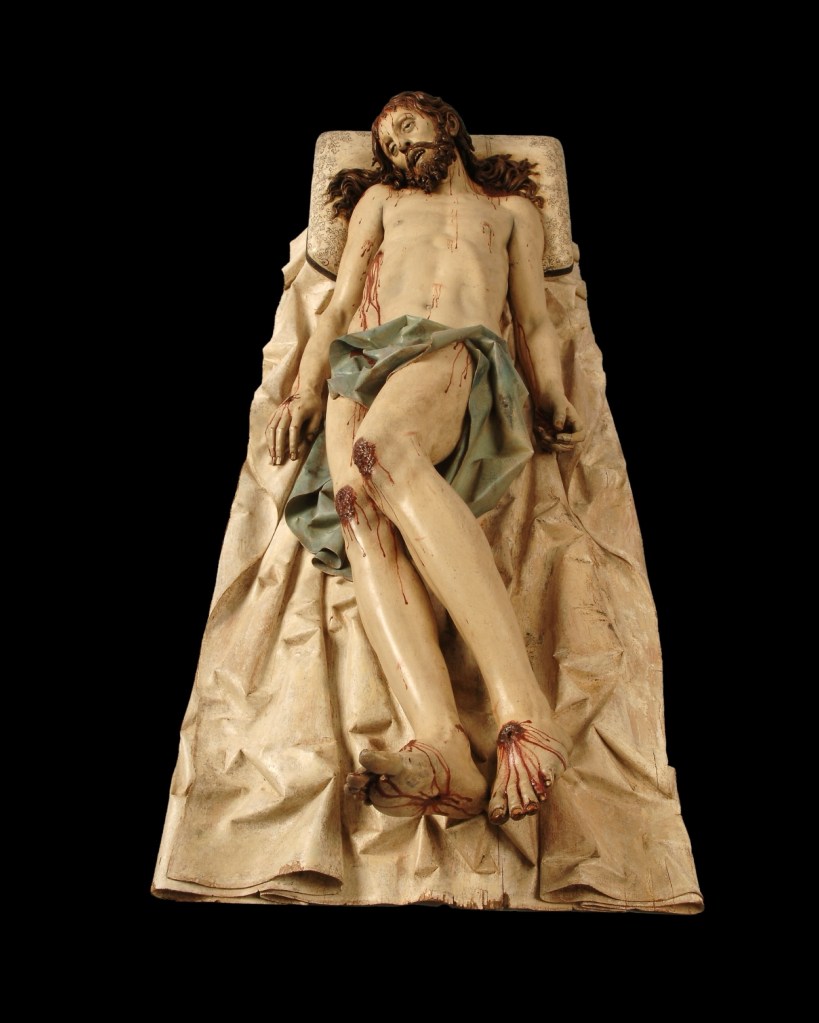
One of the undeniable qualities of Spanish polychrome sculpture is its ability viscerally to engage the viewer’s emotions, often using a realism that can be difficult to look upon. The most harrowing example of this is the figure of the Recumbent Christ developed by Gregorio Fernández (1576-1636).

In this versions from the Prado the Recumbent Christ is an image of the dead Christ, lying down for his burial but removed from the traditional group of the Pietà, which usually includes the Virgin, Mary Magdalene and Saint John. The crown of thorns has been removed and he has not yet been covered with the shroud. The head rests on one or two cushions, the eyes are not completely closed and the wound in the side is very marked. 

Fernández’s recumbent Christs are striking because they combine a strong realism in the execution of the muscles, hair, face and hands, with an extraordinary elegance in the placement, with the body in a slight curve, the head turned towards the viewer, the left leg raised to rest on the right, and the left hand sometimes projected marginally on the abdomen to enrich the contour of the figure. The polychrome, executed by professional painters, increased the emotional force of the representation. It seems to correspond to an advanced stage in the artist’s career, judging by the smoothness of the modelling and the tight curls of the beard. The carving of the beard and hair shows extraordinary virtuosity, as does the light blue loincloth and the sheet on which the body rests.