Fray Paravicino

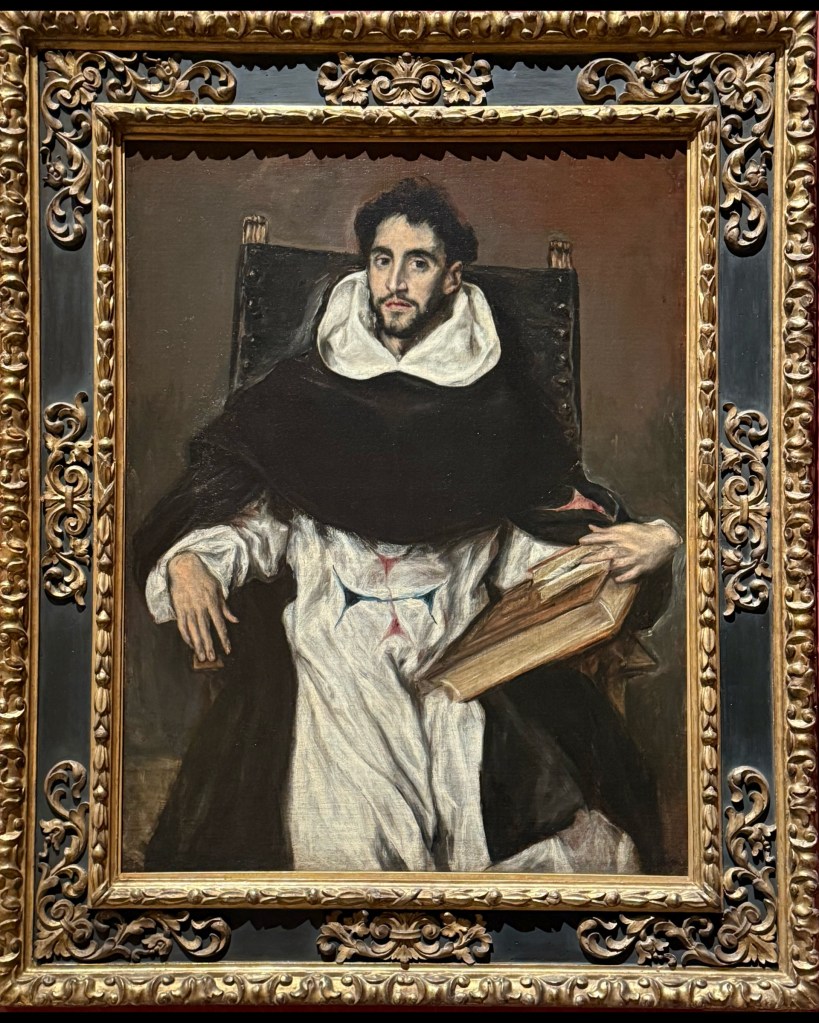
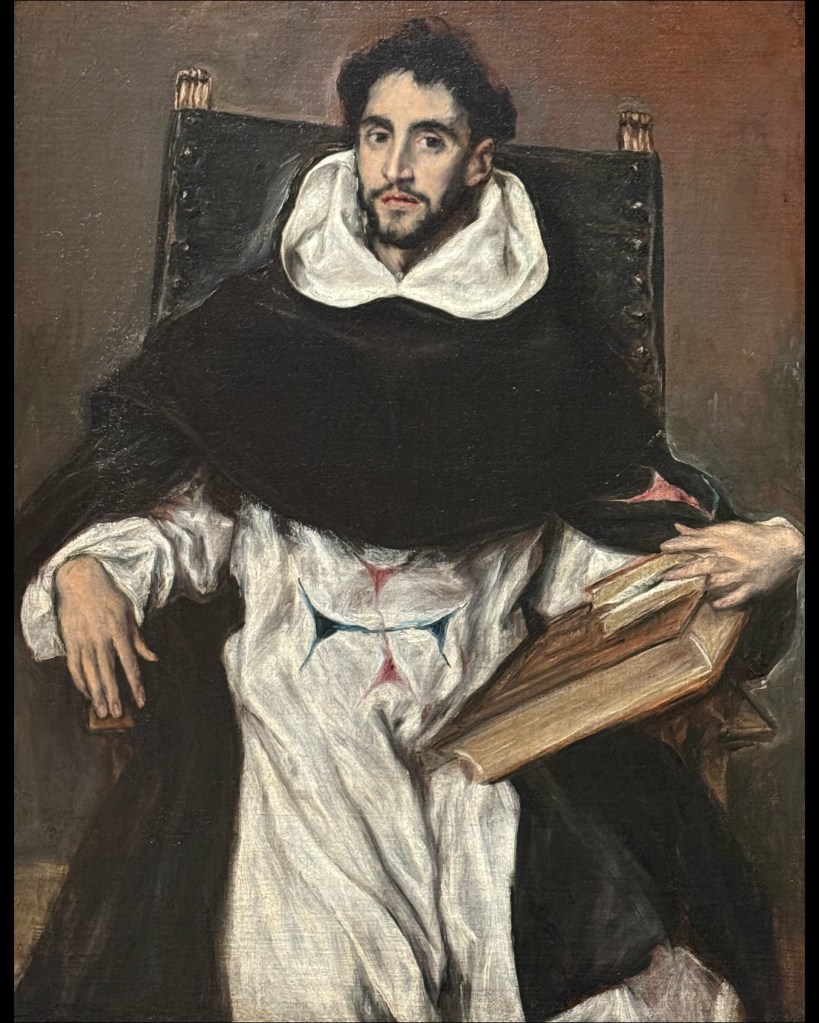
While El Greco is best known for his intense and spiritual religious paintings, he was also a perceptive and powerful portraitist. A skill we can observe in this portrait of Fray Paravicino, a close friend of the artist, who was an important theologian, orator, and poet. 

Limiting the colors almost entirely to the black and white of the friar’s habit, El Greco created a subtle and compelling image that emphasizes psychological rather than physical presence. The Boston Museum of Fine Arts purchased this work in 1904 on the recommendation of John Singer Sargent, another great portraitist and an admirer of Spanish art.

🎨 El Greco (1541-1614), Fray Hortensio Félix Paravicino, 1609. Boston Museum of Fine Arts.

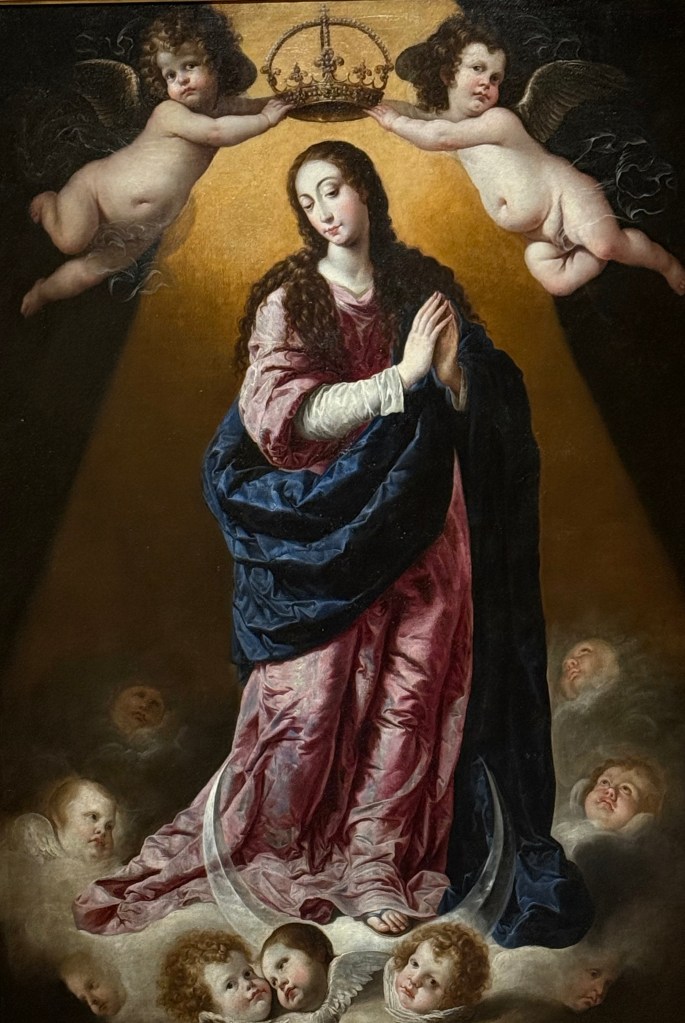
An Immaculate Restored

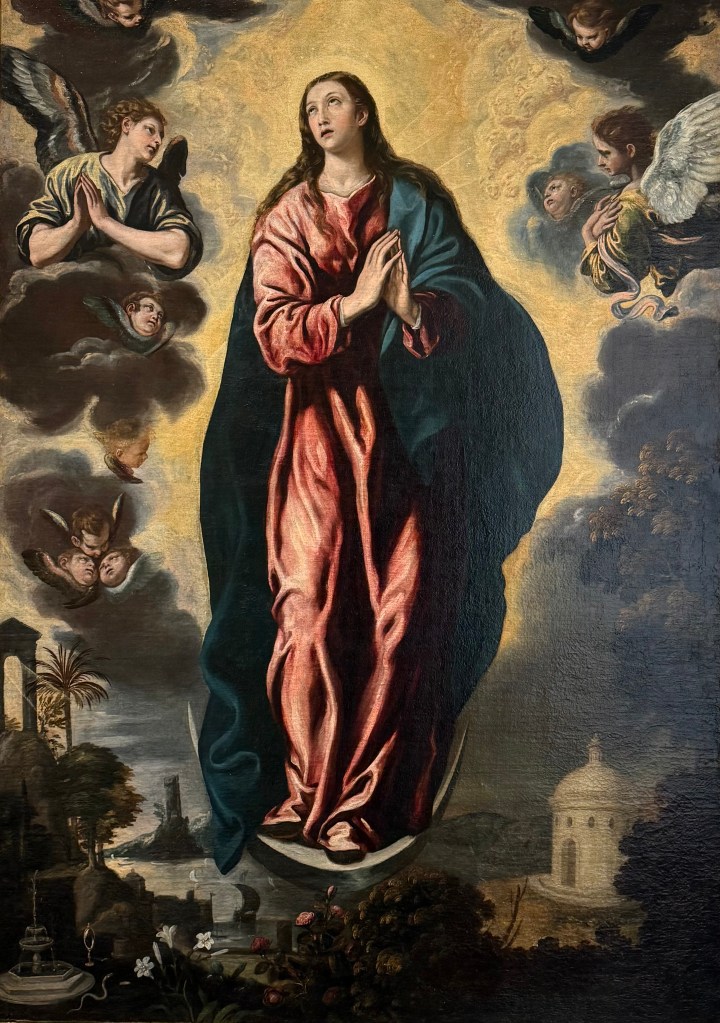
On the occasion of the commemoration of the death of Luis Tristán, the Museo de Bellas Artes de Sevilla has undertaken the restoration of this work, considered one of Tristán’s most important Marian representations, a model that was repeated by the artist on several occasions.

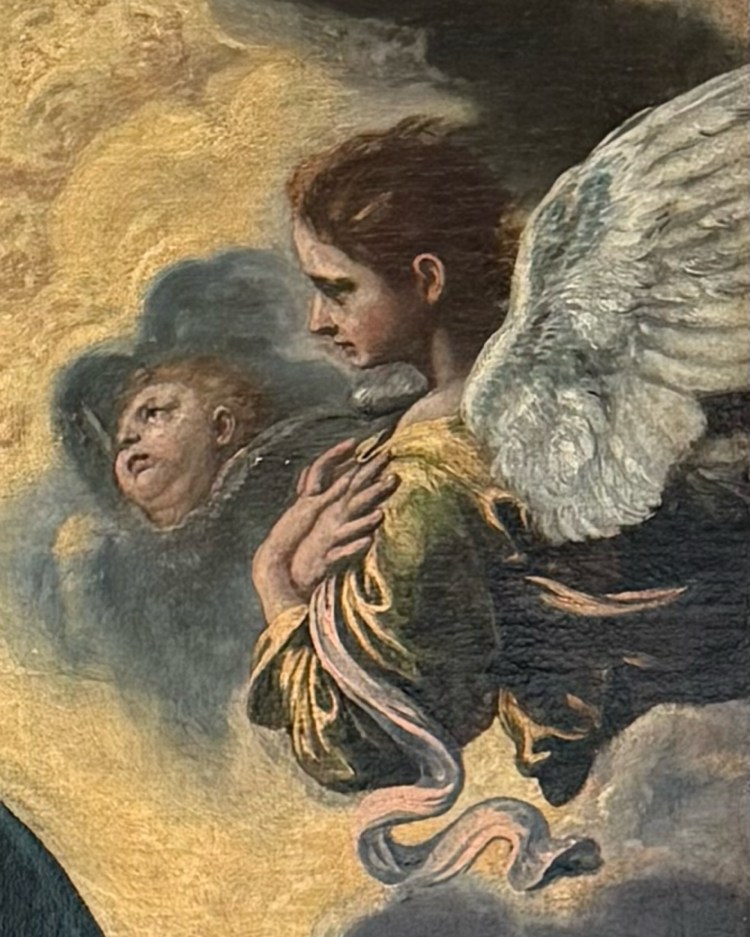
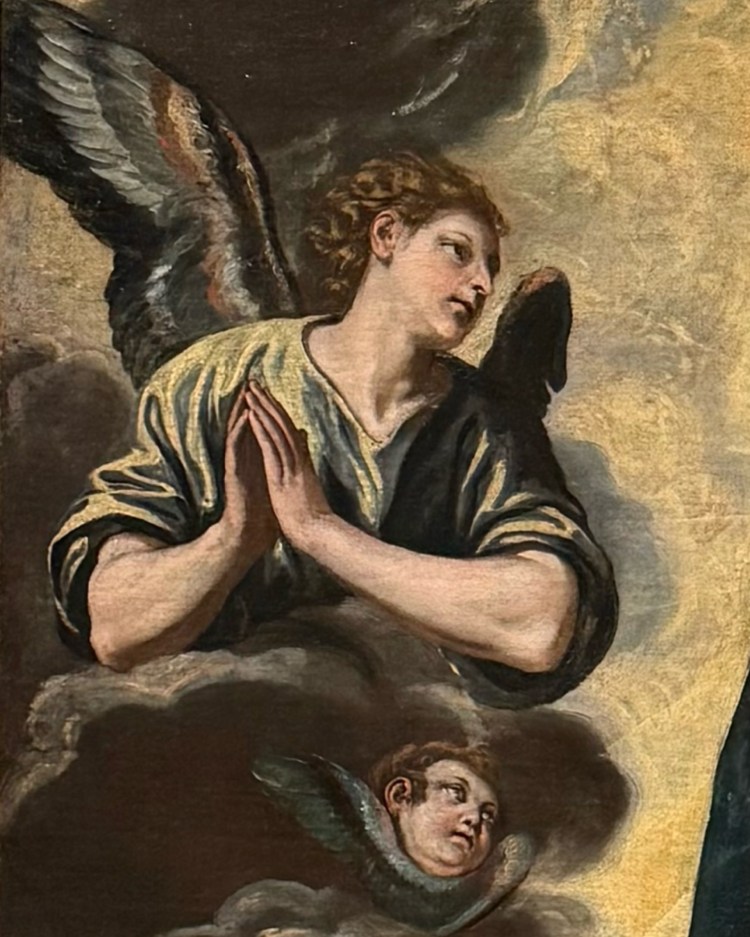
The restoration process has made it possible to recover the original vibrant colouring of the painting, which was largely obscured by the oxidation of the surface varnishes. The cleaning of these old varnishes has once again revealed the golden light that envelops the Immaculate Conception, in which the bright carmine colour of the tunic stands out in particular.

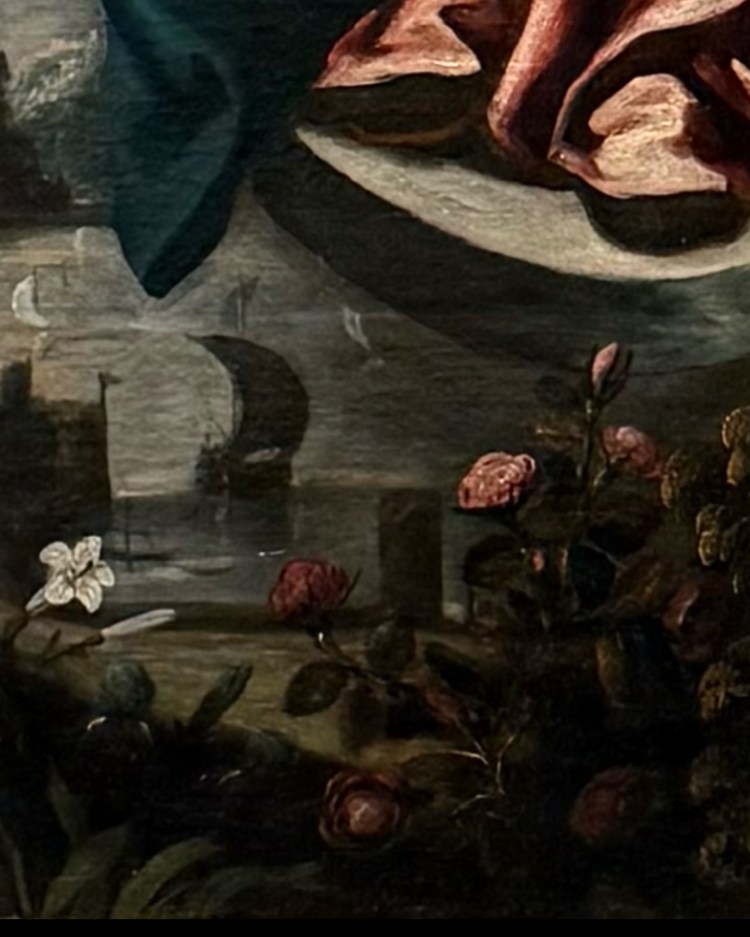
During the scientific study of the painting prior to restoration, using X-rays and pigment analysis, interesting evidence of the presence of praying figures in the lower right part of the composition has come to light.
They are currently covered by an old repainting of a small temple and vegetation that imitates the landscape on the opposite side. It is hoped that a future, more in-depth analysis, will allow us to advance our knowledge of these mysterious hidden figures.

🎨 Luis TRISTAN (1585 – 1624), The Immaculate Conception, 1620. Museo de Bellas Artes de Sevilla.

Tristán’s Franciscans

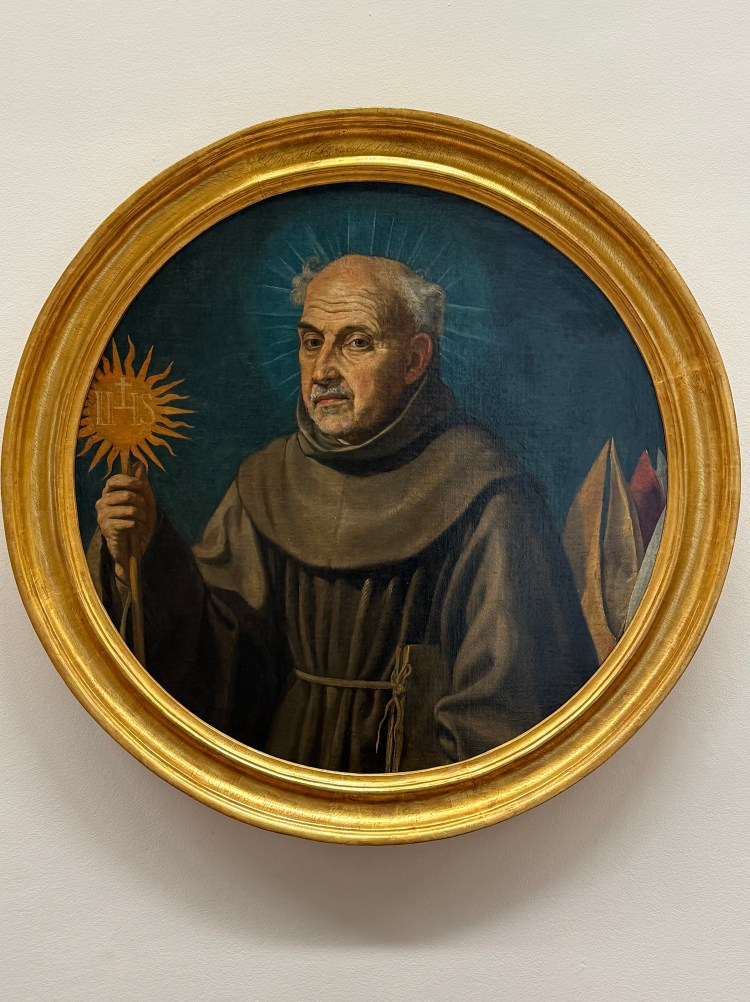
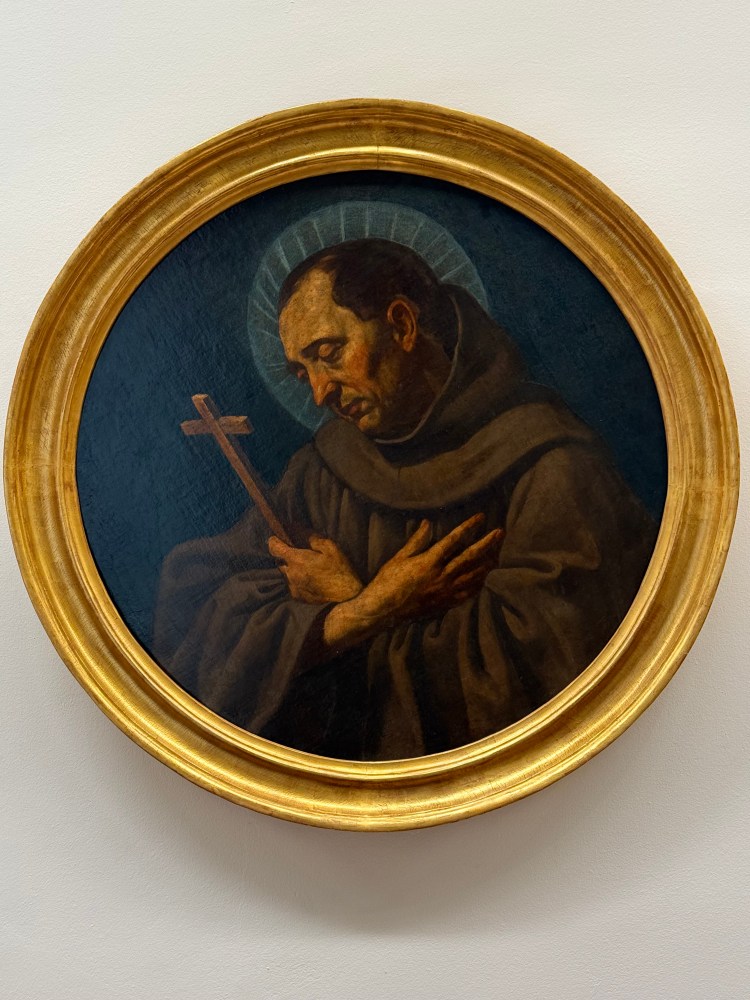
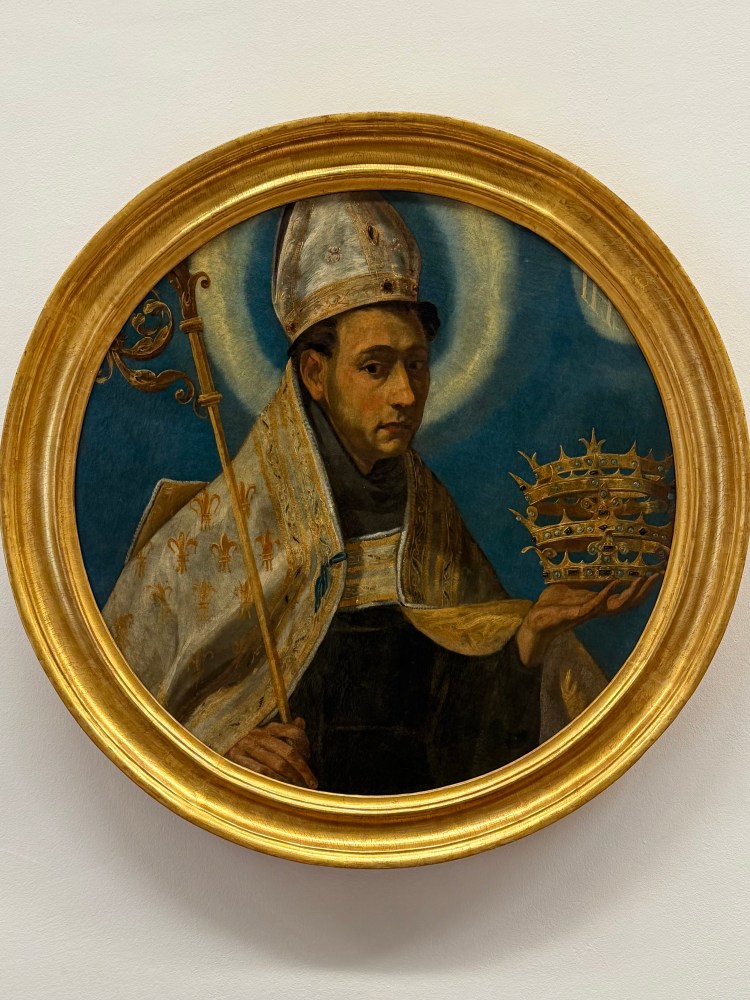
Dedicated followers of my posts will recall that 2024 marked the 400th anniversary of the death of the painter Luis Tristán (1580/1585 – 1624), who trained in Toledo as a disciple of El Greco. Thankfully the Museo de Bellas Artes de Sevilla has kept the celebrations going with a delightful new display of his works.

Tristán visited Seville, according to his annotations in the book Le vite de’ più eccellenti pittori, scultori e architettori by the painter and architect Vasari, which he owned after it belonged to El Greco. This possible stay may have facilitated the arrival of his works in Seville, where some of them are still preserved, such as The Trinity, signed in 1624, in the cathedral. From the convent of San Buenaventura convent are these four round canvases of Franciscan saints that have been in the collection of the Bellas Artes since the 19th century. 

The expressiveness of his figures – saints, virgins and angels – his decisive brushstrokes and the vivid colours he used are reminiscent of El Greco’s work. His style was also influenced by the novelties of Italy, where Tenebrist naturalism, known to the artist during his stay in Rome, triumphed.

🎨 Luis TRISTÁN (1580/85 – 1624)
1. San Bernardino de Siena
2. San Diego de Alcalá
3. San Antonio de Padua
4. San Luis obispo de Tolosa

Global catholicism

Orchestrated by the Congregazione de Propaganda Fide and carried out by the religious orders, the activity of the missionaries created a dense network of relations that connected Rome to the entire globe.

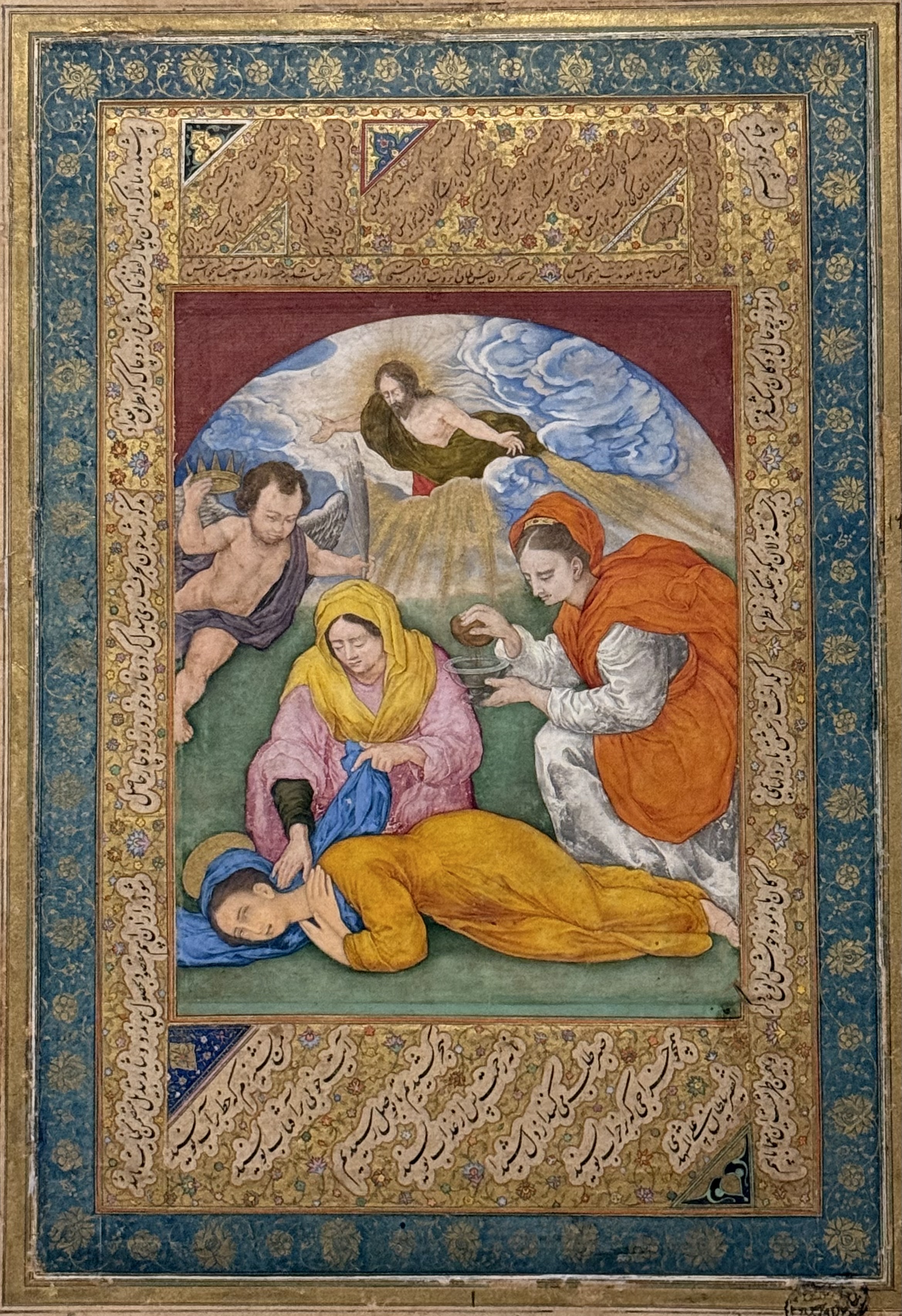
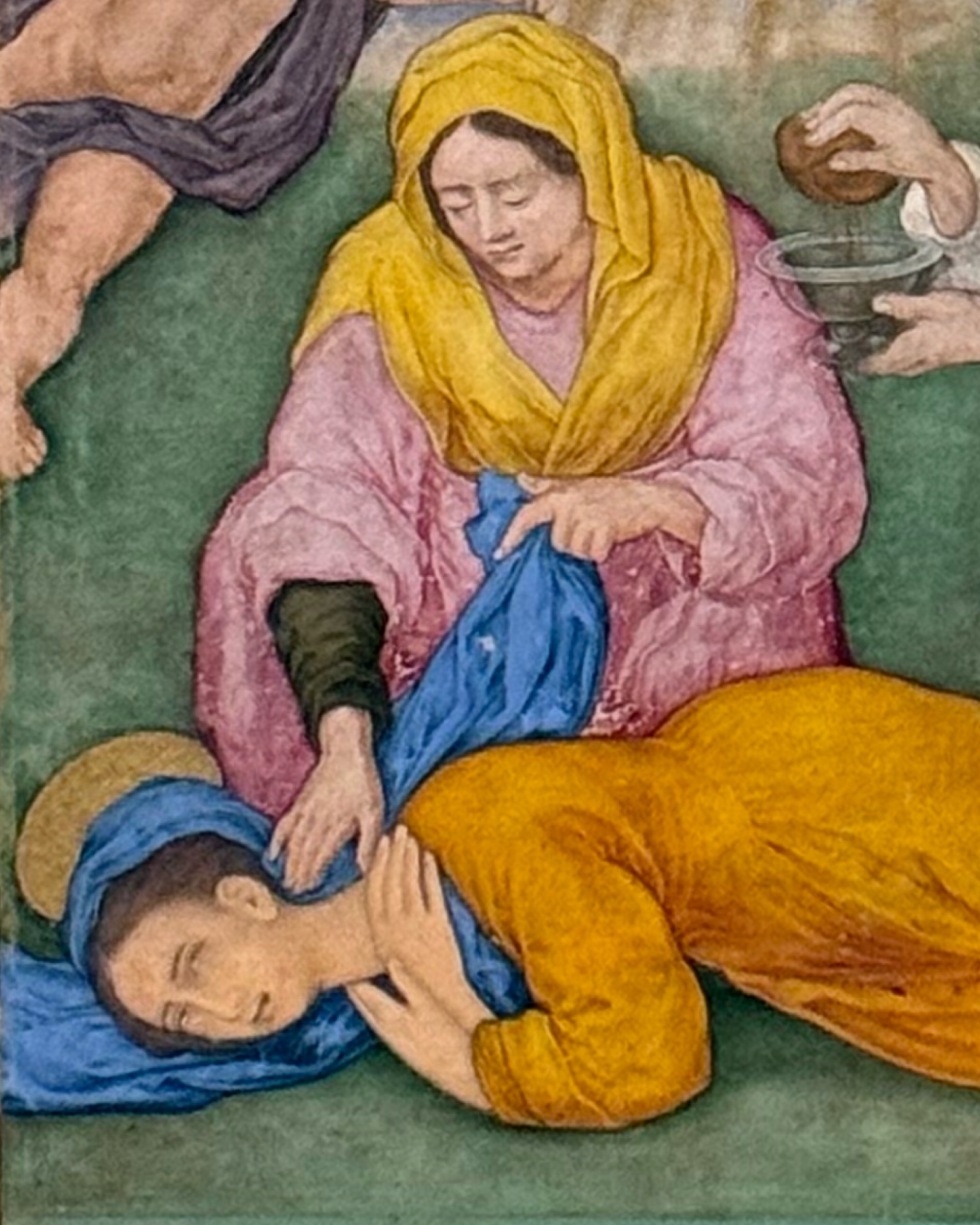
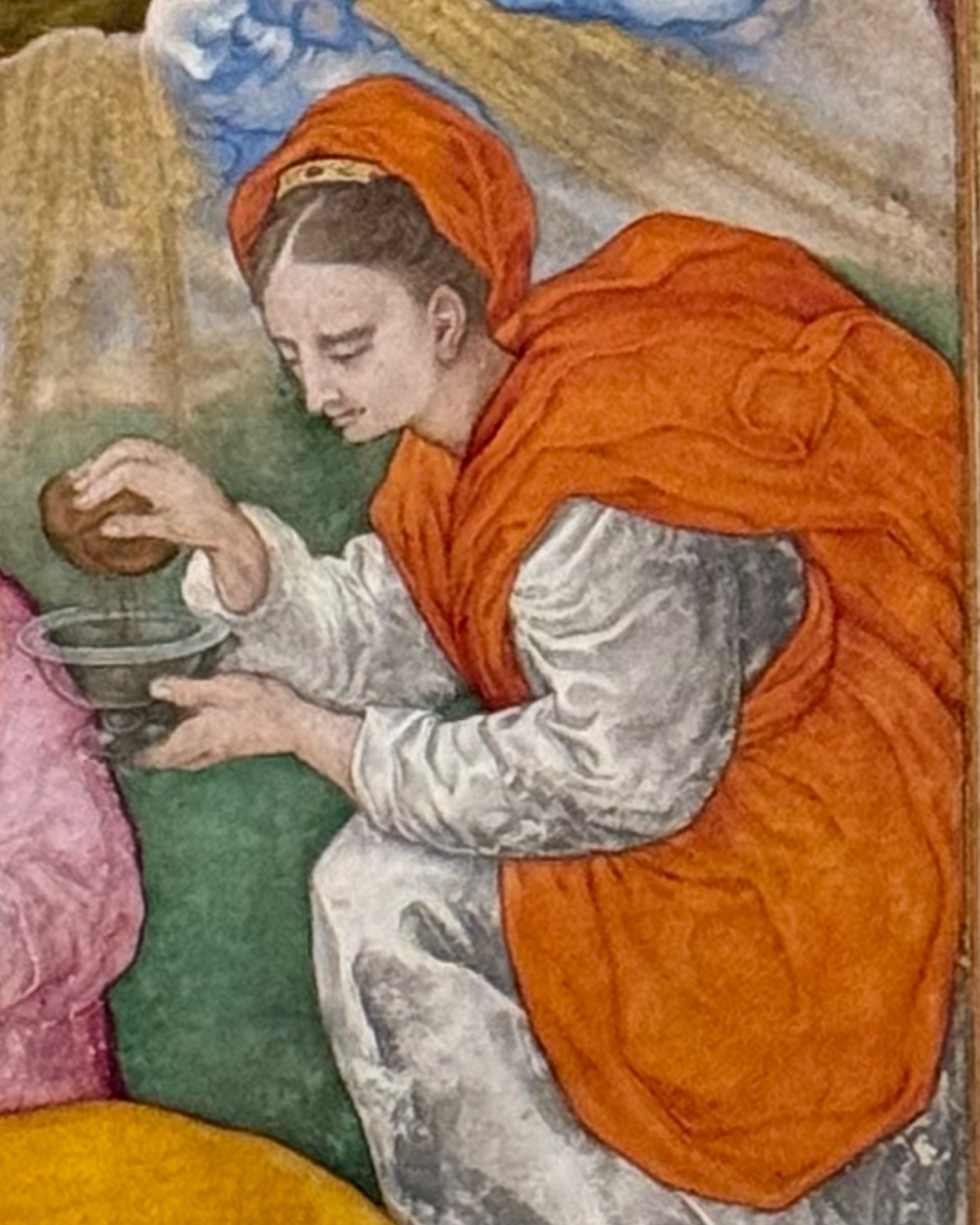
The Salus Populi Romani, disseminated through engraved and painted copies, was reproduced in various cultures and in different media, as attested by a 17th-century Chinese scroll, while celebrated works of the Catholic Counter-Reformation like Stefano Maderno’s Saint Cecilia (Rome, Santa Cecilia in Trastevere) were circulated by missionaries through printed replicas, which spawned further copies like the one by the artist Nini at the Mughal court.

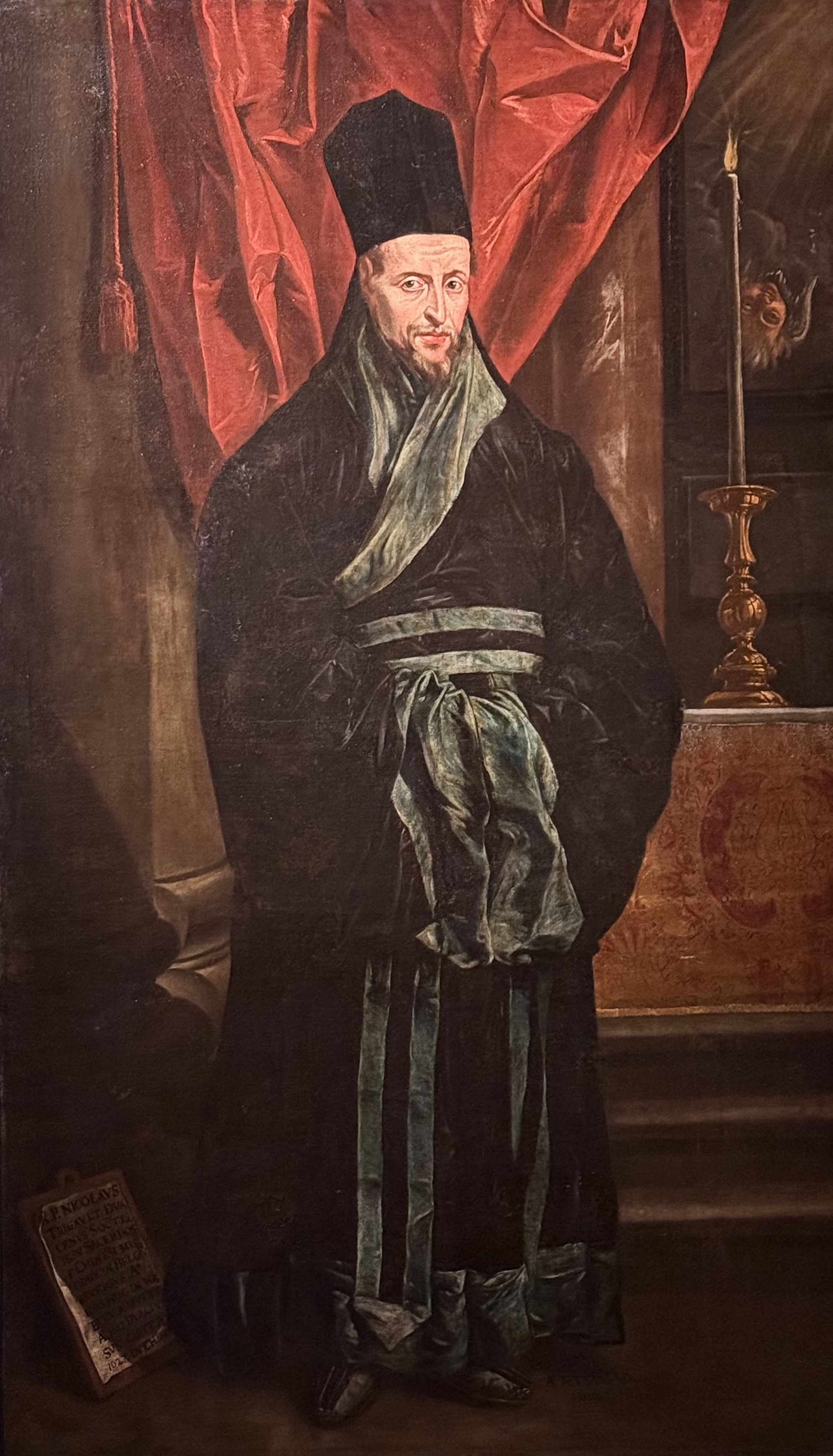
The French Jesuit Nicolas Trigault, portrayed in traditional Mandarin dress by the studio of Rubens in 1617 before setting off on his second mission to China, embodied these complex relations to the full. Although he was not Roman, before departing, in 1615, he stayed in the city to prepare the mission and to publish a volume of writings by the Jesuit Matteo Ricci, which he dedicated to Pope Paul V.

As well as the circulation of Roman images around the world, this period also saw the canonization of saints born in or related to cultural contexts beyond Europe, like, for example, Saint Rose of Lima, a Peruvian who had a notable impact on the imagination not only of her own people, but also in Rome itself.

🎨 Hieronymus Wierix (1553 – 1619), after Francesco Vanni (1563 – 1610), Death of Saint Cecilia, 1599 – 1605.

Peter Paul Rubens, Portrait of Nicolas Trigault, XVII century.

Lazzaro Baldi (1624 – Roma, 1703), Ecstasy of Saint Rose of Lima, XVII century.
Barocco Globale. Il mondo a Roma nel secolo di BerninI

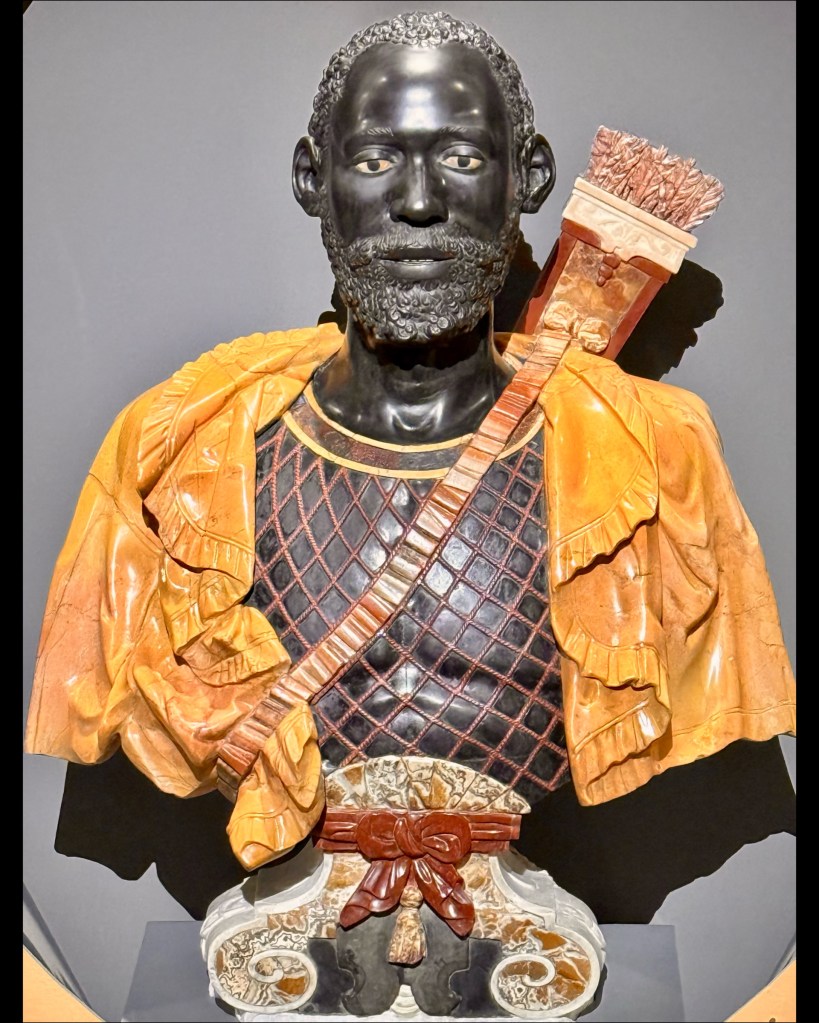
Francesco Caporale, Bust of Antonio Manuel Ne Vunda, 1608. Basilica of Santa Maria Maggiore, Rome.

The journey to Rome of Antonio Manuel Ne Vunda (1571-1608), the young ambassador of King Álvaro Il of Congo (1587-1614), was beset by many vicissitudes. Ne Vunda set out from the Kingdom of Congo in 1604, and during his journey was robbed by Dutch pirates before reaching Lisbon wounded and almost naked. The Spanish crown, which frowned on any contact between Congo and the Holy See, detained the ambassador in the Iberian Peninsula for about three years. However, in December 1607 Ne Vunda finally managed to reach Rome, although by now seriously ill. Pope Paul V received him with great ceremony and, deeply affected by his death on the Eve of Epiphany in 1608, commissioned a sumptuous monument for the Basilica of Santa Maria Maggiore.

This bust greats the visitor at the entrance to the fascinating exhibition ‘Barocco Globale. Il mondo a Roma nel secolo di BerninI’, currently at Rome’s Scuderie del Quirinale. A show that seeks to place seventeenth century Rome in its global context, exploring issues of colonialism, power, religion and race in a truly thoughtful and sensitive manner, without recourse to either stereotyping or polemics. To celebrate this engaging exhibition my posts this week will be exploring some of the most eye catching exhibits and their stories.

Two Peters

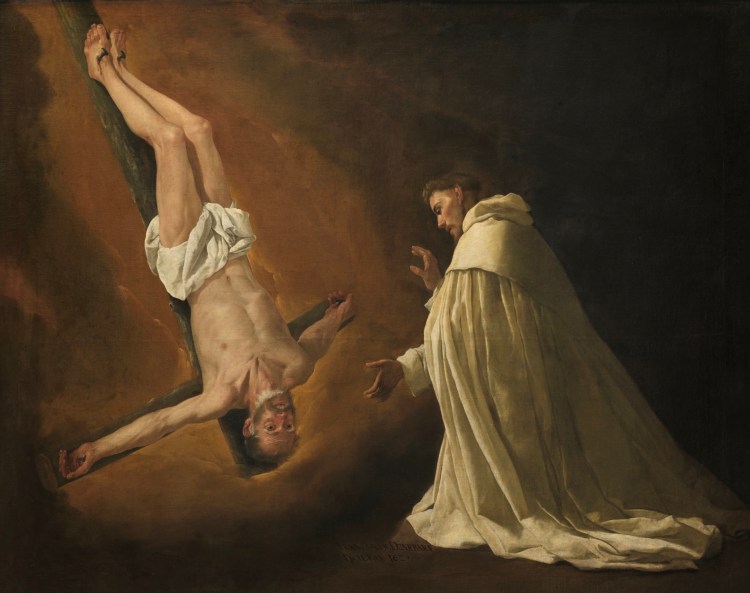
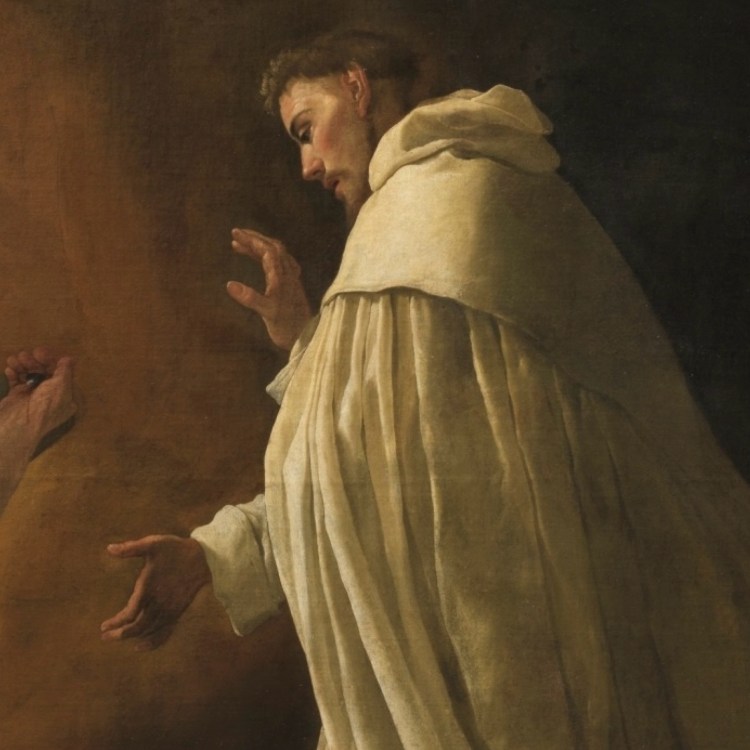
As Pope Leo XIV is today publicly installed into the Petrine Ministry, receiving the Pallium and The Fisherman’s Ring at the beginning of his Pontificate, the sense of responsibility must be truly terrifying. I thought I would therefore share this image by my beloved Zurbarán of Saint Peter appearing to the Mercedarian Saint Peter Nolasco.

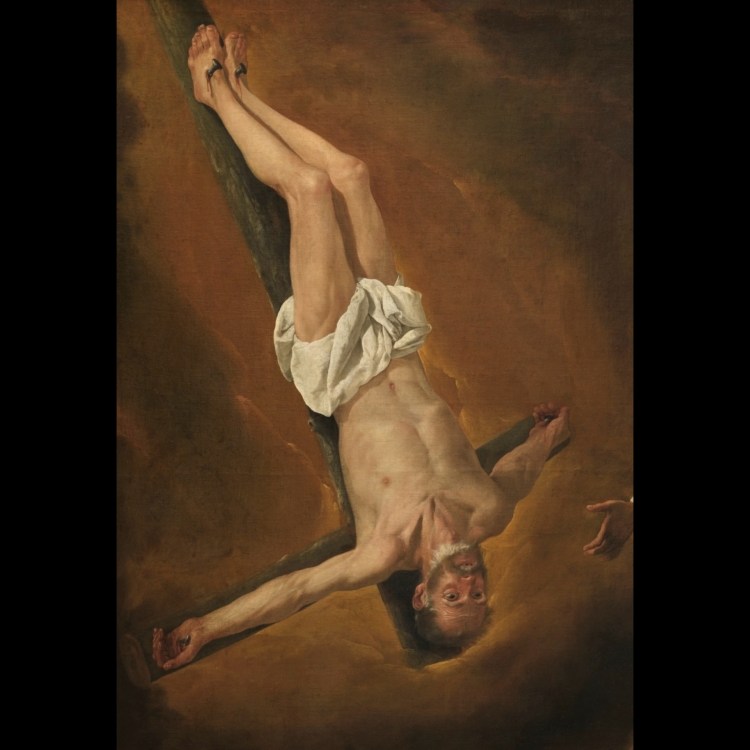
According to Friar Alonso Remón’s 16th century history of the Mercedarians, Peter Nolasco was very eager to go to Rome to visit Saint Peter’s tomb, and his patron saint appeared to him on three consecutive nights to console him for not being able to go. On the third night, as he was praying, Saint Peter appeared to him, crucified upside down, and urged him to remain in Spain, where he had much to do.

In this image Zurbarán produces a spectacular meeting of the divine and earthly spheres -one vibrant with incandescent light, and the other, intense and physically realistic. Zurbarán show no details of the ecclesiastical setting: the saint and his vision are enveloped in profound darkness and abstracted from all material surroundings. The two Peters contemplate each other fixed in a spiritual communion that transcends time and space. A gift we pray will be given to Pope Leo.

🎨 Francisco de Zurbarán, The Apparition of Saint Peter to Saint Peter Nolasco, 1629. The Prado, Madrid.

Flaming Hearts

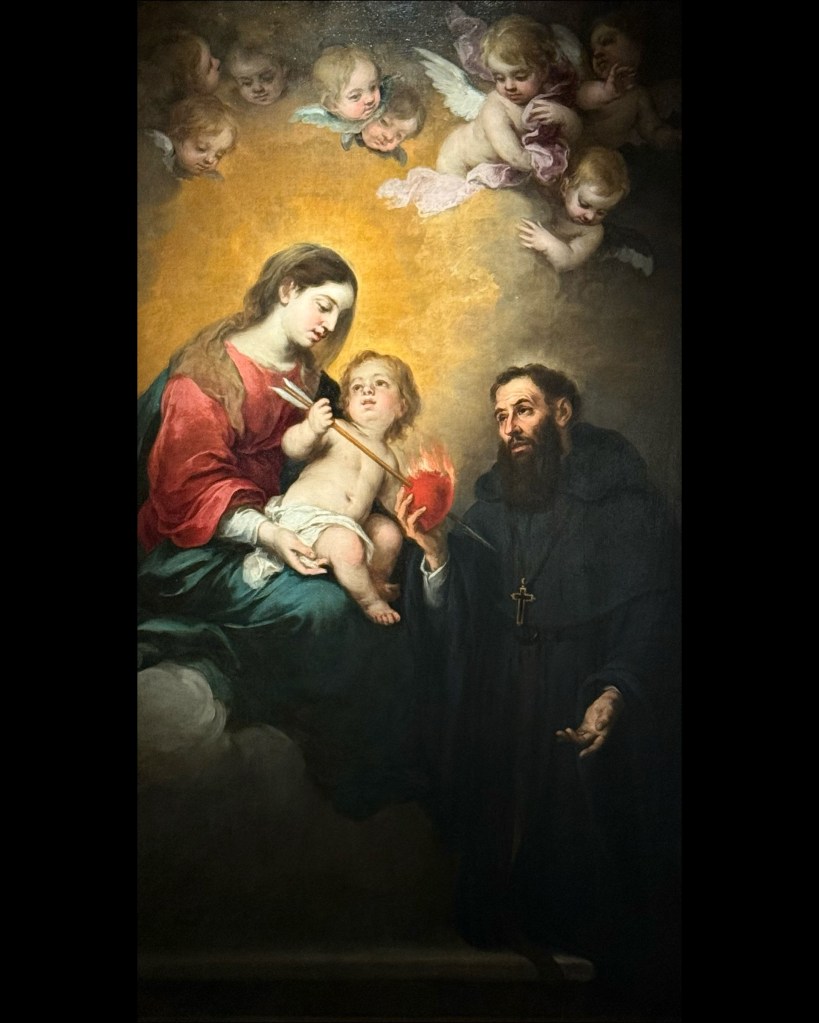
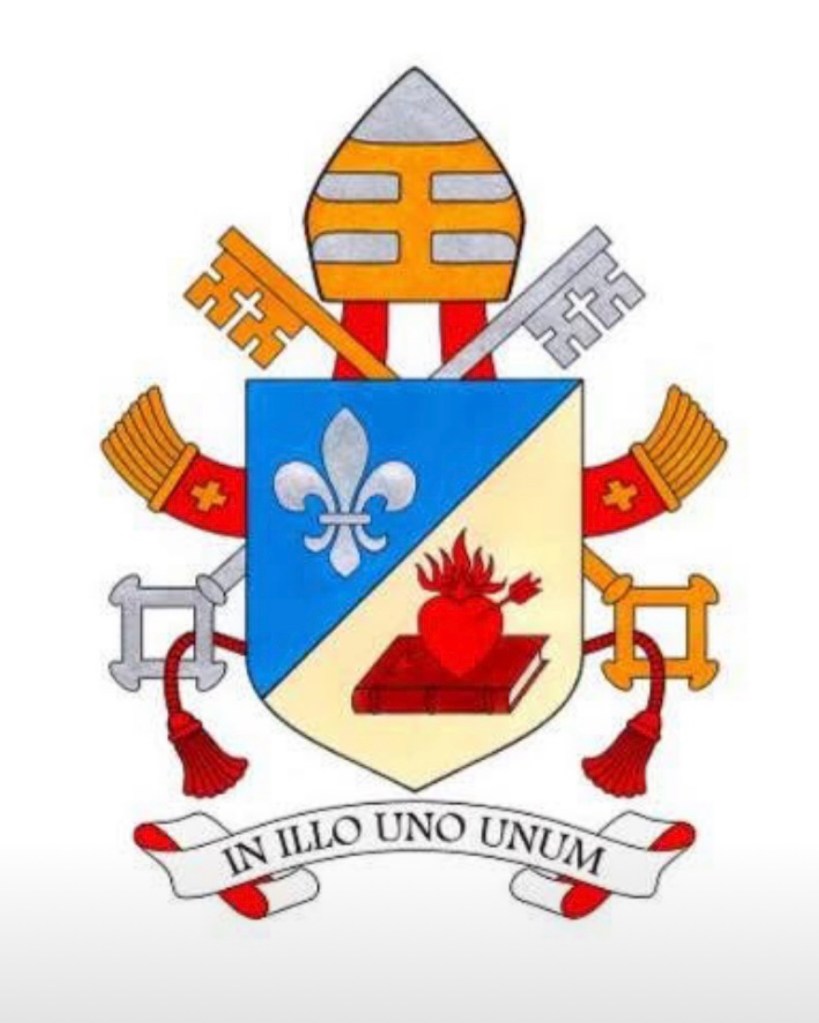
One of the symbols that Pope Leo has chosen for his coat of arms is a flaming heart on a book. This is an emblem of the Order of St. Augustine, of which Pope Leo served as Prior General. The figure symbolically evokes Saint Augustine’s words in the Confessions: ‘Sagittaveras tu cor meum charitate tua’ (“You pierced my heart with your love”). From the 16th century on, the symbol has appeared in the Augustinian coat of arms and is typically accompanied by the open book, which symbolizes the Word of God that transforms every human heart, as it did Augustine’s.

In this representation by Murillo painted in 1664 for the Convento de San Agustino in Seville, we see Augustine’s heart quite literally on fire, pierced by an arrow from the hand of the Christ child. The heart appears as a gateway for the soft celestial light surrounding the infant and child into the earthly gloom of the saints black robes.

🎨 Bartolomé Esteban Murillo (1617 – 1682), San Agustín con la Virgen y el Niño (1664). Museo de Bellas Artes de Sevilla.

Viva San Isidro

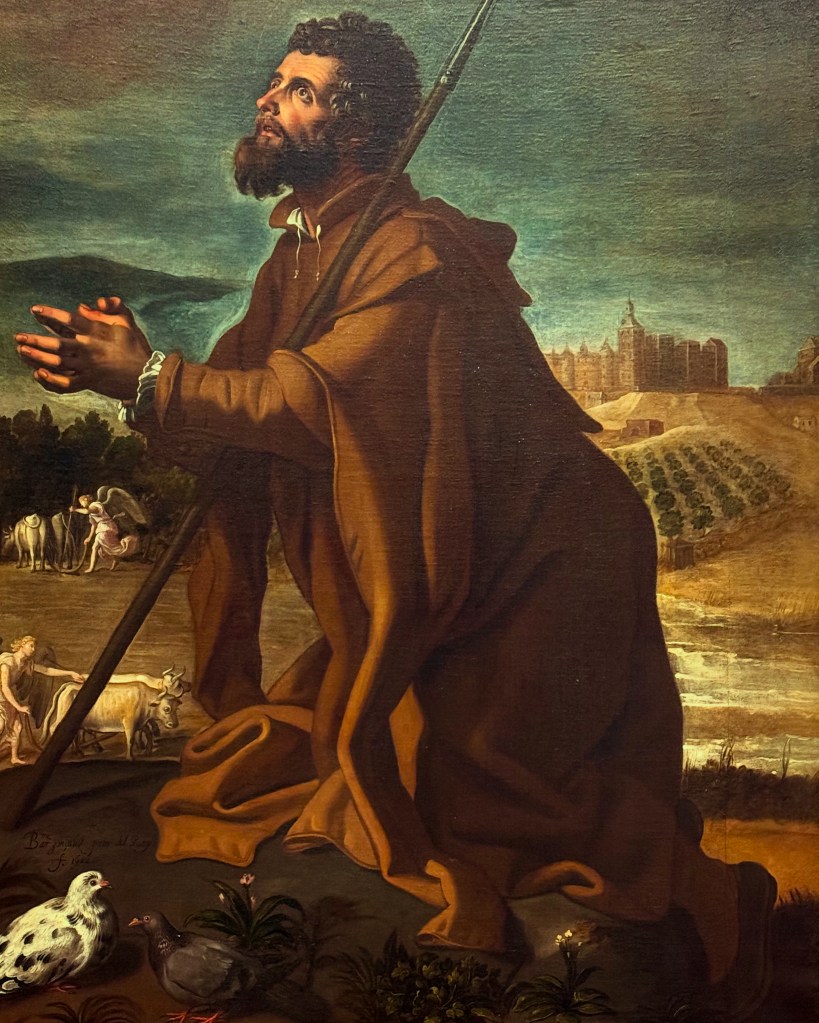
BARTOLOMÉ GONZÁLEZ (1564-1627), Saint Isidore Praying, 1622. Museo de Historia de Madrid.

The 15th May is the Feast of San Isidro, the patron saint of Madrid. In this image by Bartolomé González we see the farmer -saint kneeling in prayer while angels have been sent to help him manage both his work and his prayer life. 

González was born in Valladolid, and studied under Patricio Caxés and Juan Pantoja de la Cruz. He moved to Madrid, where he is documented from 1607 working for the Royal Court with Rodrigo de Villandrando and Andrés López Polanco. From 1617 he served as painter to King Philip III of Spain. His work was almost exclusively dedicated to the production of portraits of the royal family, making this image of San Isidro a rare example of a religious work, although showing the strong characterisation you would expect from a portrait painter. 

¡Viva San Isidro! ¡Viva Madrid!

Pereda’s Immaculate Conception

Antonio de Pereda (1611-1678), The Immaculate Conception, c.1634. Museum of Fine Arts Boston.

Pope Leo XIV has already spoken of his love for Mary, following in the footsteps of the great Pope Leo XIII who wrote no less than 11 encyclicals devoted to our Lady and her Rosary. So I thought I might celebrate the papal election with a few more Marian images, this one by Antonio de Pereda, who was among the leading artists working in Madrid in the 17th century. 

In the Book of Revelations, John the Evangelist describes a vision of the Madonna standing on a crescent moon wearing a crown of twelve stars. His account serves as the foundation for many images of the Immaculate Conception, a motif that reached a crescendo in 17th-century Spain. In fact, this large altarpiece is one of three versions the artist painted of the subject.

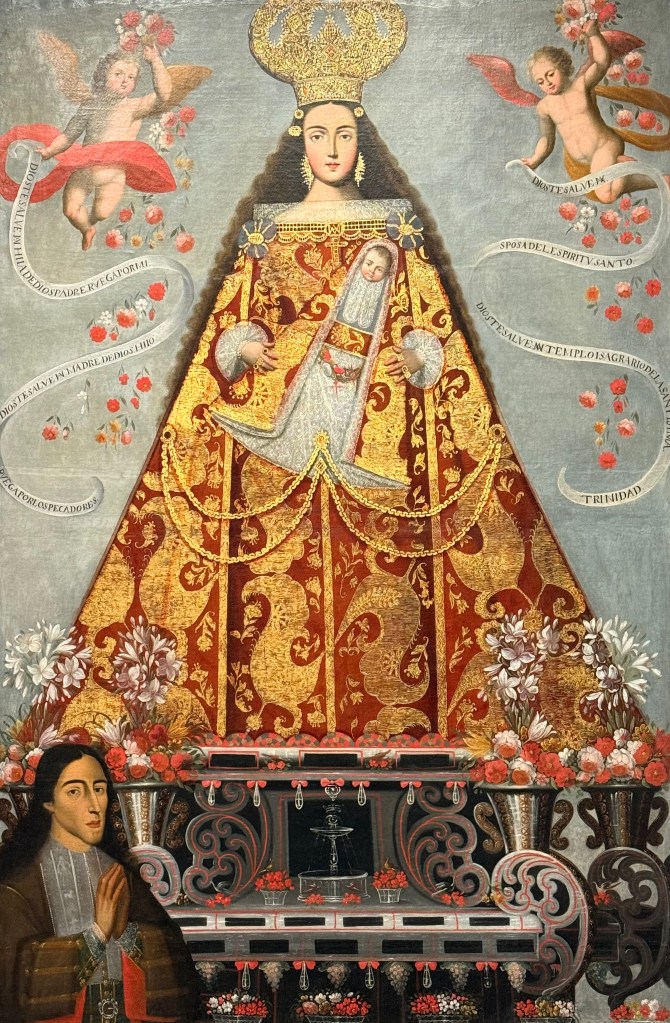
Nuestra Señora de Belén

Unidentified artists active in Cuzco, Viceroyalty of Peru, Our Lady of Bethlehem with Portrait of an Indigenous Donor, 18th Century. Harvard Art Museums, Cambridge, MA.

Nuestra Señora de Belén is one ot the patron saints of the Peruvian city of Cuzco. This painted representation is based on a famous sculpture that is paraded through the streets of Cuzco on the feast of Corpus Christi. After celebrations, the statue is returned to its niche above the altar at the Convent of Santa Clara, a lay community founded in 1549 for the education and protection of young women of mestizo (indigenous and European) ancestry.

Though the artist and the donor are unidentified, the scale of the painting and the specificity of the donor’s features speak to the stylistic and technical virtuosity of Catholic painting by and for Indigenous communities in the Andes during colonial rule. The visual language of ‘Cuzco School’ paintings draws equally upon Indigenous cosmologies, local expertise in pigments and textiles, and European conventions of pose, gesture, and scale to compose works that are both sumptuous and didactic.