Your are the Rock

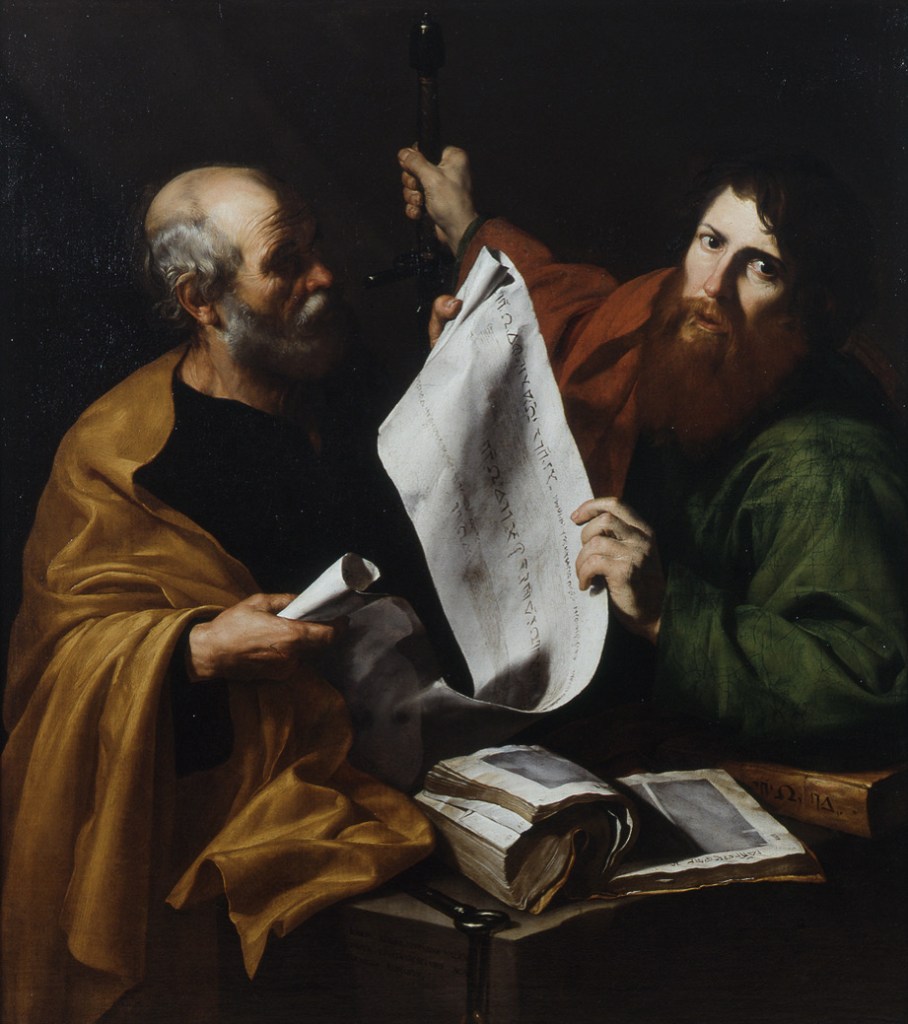
The Latin inscription at the bottom of the painting denotes its links with Rome and the importance of the work, as clearly demonstrated by its place in Ribera’s oeuvre. Born near Valencia, Spain, where he trained, he moved to Italy at an early age. After a fruitful stay in Rome, where he discovered Caravaggism, he settled permanently in Naples, a Spanish stronghold. “Lo Spagnoletto” was the most important Neapolitan painter of his time, working for both the clergy and the local nobility, as well as for Spain.

In this now classic composition, the sculptural presence of the two saints and the influence of Caravaggio, visible even in the naturalism of the dirty fingernails, are particularly admirable. Ribera painted directly, without preparatory drawings, reusing a canvas that had already been used. The rendering of the shadows and textures is masterful.

The two saints were martyred on the same day in Rome. United by the intensity of their gazes, the two founding fathers of the Church, recognisable by their attributes, are depicted in a belligerent attitude: Saint Paul, brandishing his sword in front of his open book, faces his superior Saint Peter, armed with his key and dressed in his ochre-brown cloak, symbol of revealed faith. Thus, maturity and old age, nobility and the people, doctrine and order are contrasted. Avoiding staticity, Ribera demonstrated his virtuosity in composition thanks to the depth given by Saint Paul’s arm. The still life of the books attests to the young artist’s mastery and the place these pillars of the Catholic religion occupied.
The Sacred Heart

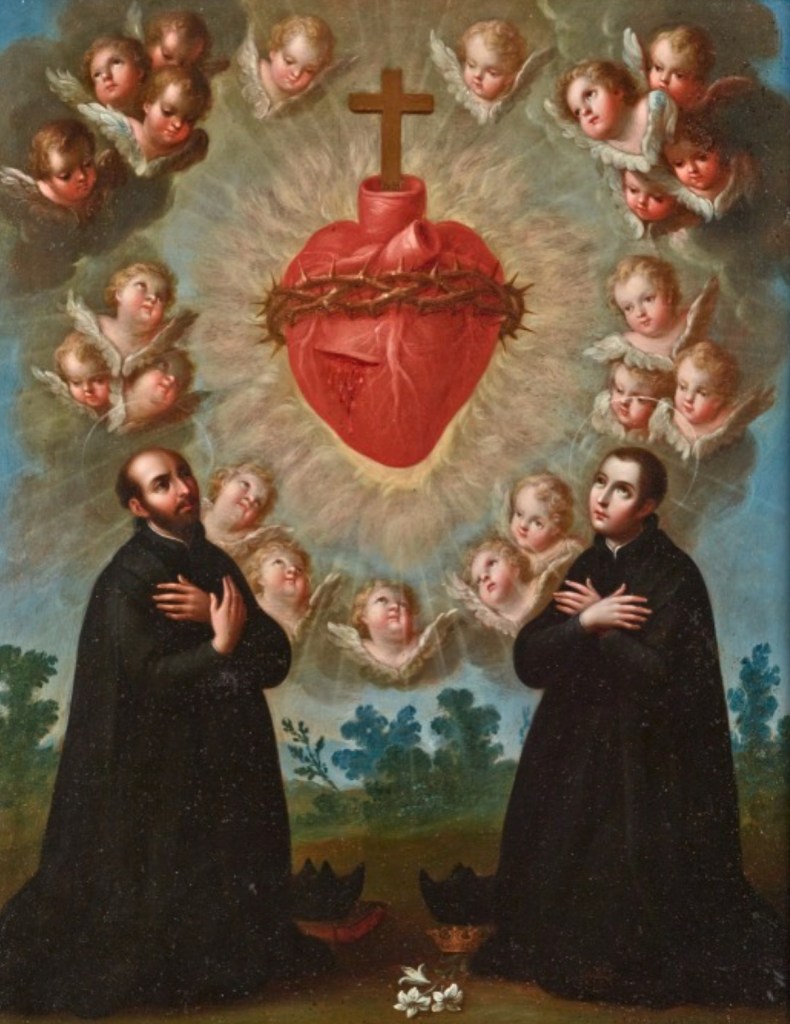
To celebrate today’s feast of the Sacred Heart of Jesus here is an image of ‘The Adoration of the Sacred Heart with Saints Ignatius Loyola and Louis Gonzaga’ by the Mexican artist José de Páez (1727-1790).

Painted around 1770 this devotional image depicts two Jesuit saints kneeling before the Sacred Heart of Jesus. The flaming heart is surmounted by a cross and surrounded by a gloria of cherubs. Devotion to the Sacred Heart was first initiated by a mystic nun, Marguerite Marie Alacoque, in the 1600s and advocated in the 1700s by the Jesuits who, in response to Enlightenment philosophy, encouraged contemplation of nature and its creation as an avenue to reconcile the two worlds of religion and science. The iconography was particularly popular in New Spain in the 1700s, and featured in paintings, prints, and sculpture.

José de Páez seems to have been a student of the important painter Nicolás Enríquez (1704-1790). Páez became one of the most prolific artists of the mid- to late-1700s and is known for the jewel-like quality of his work. This oil on copper painting features the red and blue tones typical of Páez’s work, along with the gentle facial expressions of the two Jesuits.

The Baptist’s Birthday

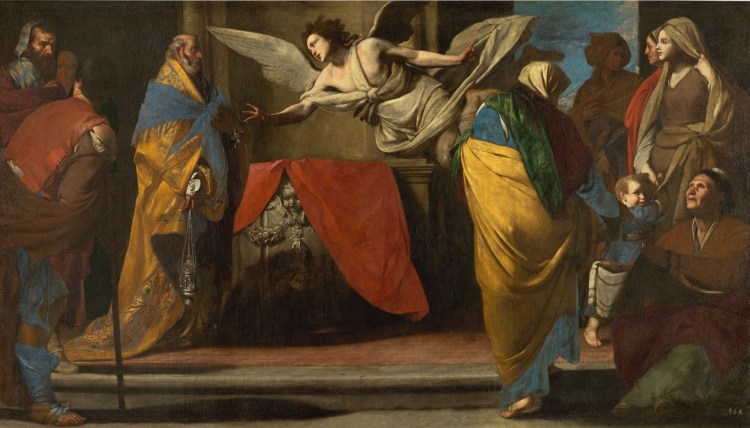
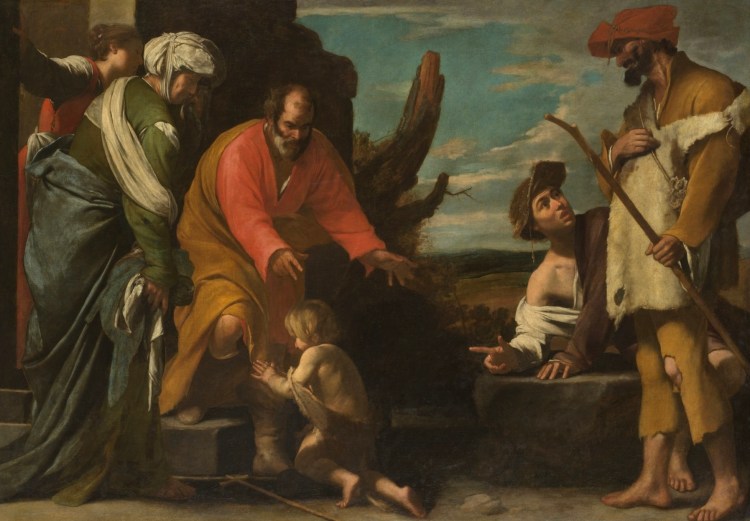
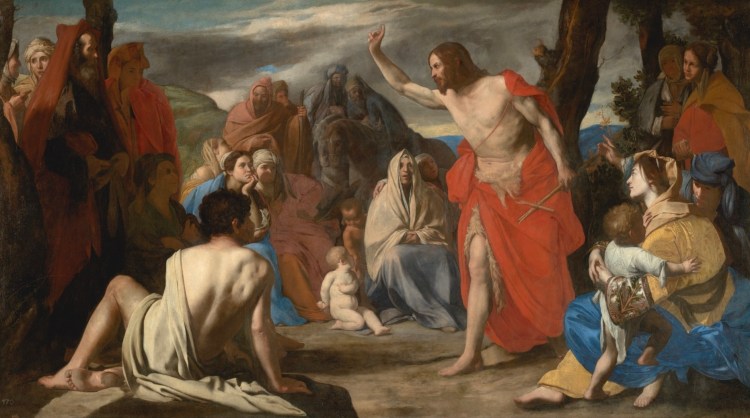
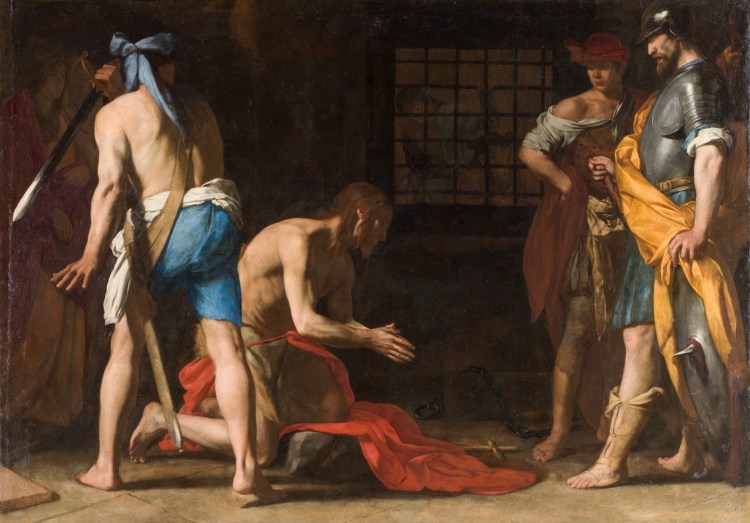
To celebrate the Nativity of Saint John the Baptist I thought I’d share these five beautiful canvases depicting the Saint’s life that were commissioned in Naples from Artemisa Gentileschi and Massimo Stanzione. They were painted for the chapel in the hermitage dedicated to the Baptist in the grounds of the Buen Retiro Palace in Madrid.

Artemisia painted The Birth of John the Baptist while Stanzione painted The Birth announced to Zacharias, The Preaching of the Baptist, The Beheading, and Saint John the Baptist leaving his Father’s House. Paolo Finoglio painted a now missing canvas of Saint John in Prison.

As is the case with many of the works commissioned for the new Retiro Palace, important details of these paintings, including their completion date and original location, are subject to controversy. Given the steps taken in commissioning other series of paintings in Naples and Rome during the 1630s for the Retiro, it is likely that the Spanish Viceroy in Naples, the Count of Monterrey (or one of his agents), commissioned Stanzione. The artist delegated one painting to Artemisia and the other to Finoglio. The 1701 Will of the Spanish King Charles II valued Finoglio’s painting at a lower price, indicating that the Madrid court held him in lesser esteem.

The Virgin of Guadalupe

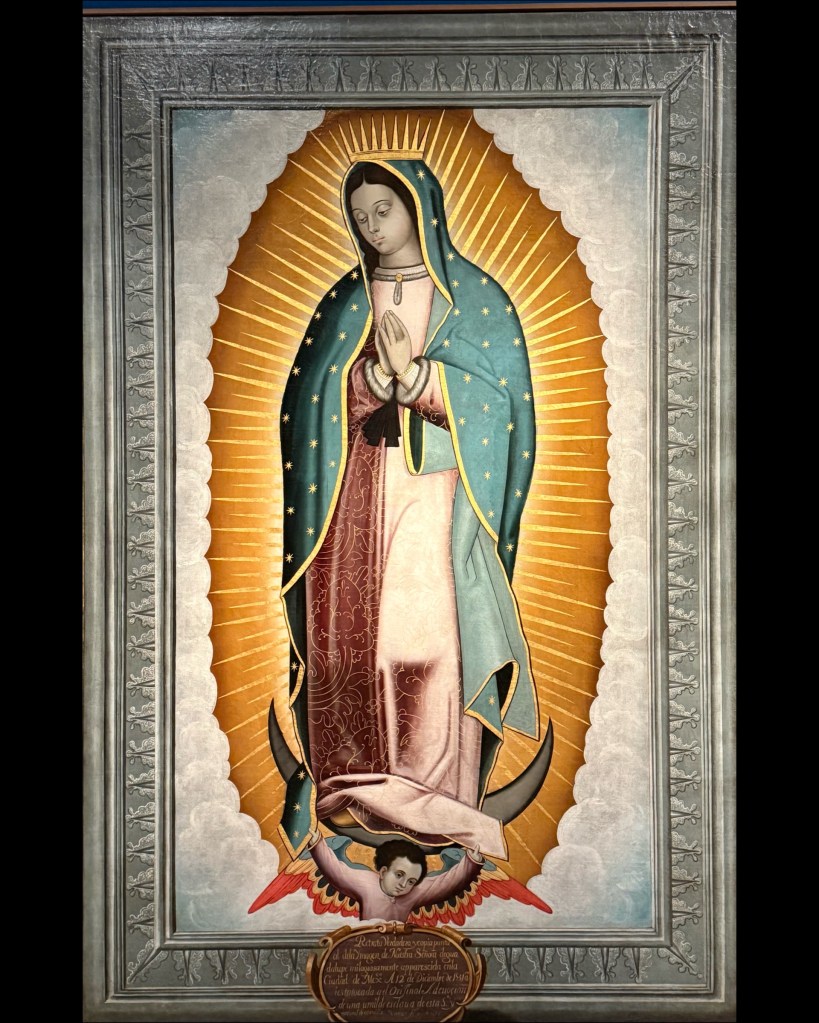
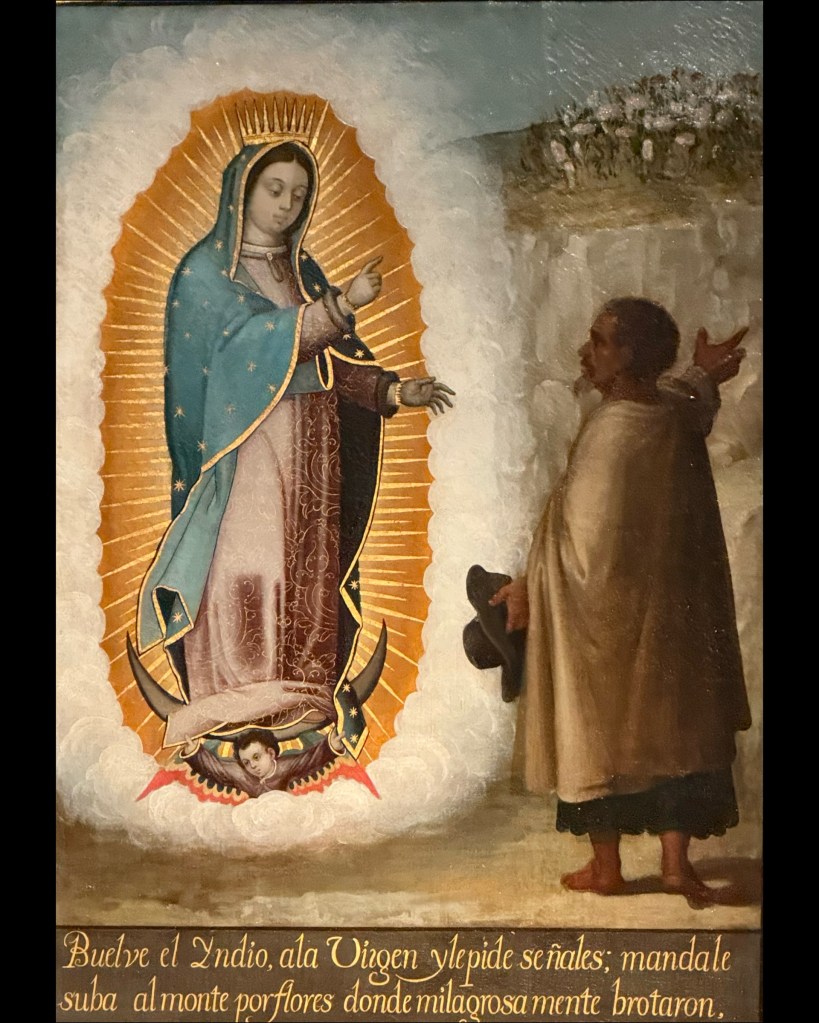
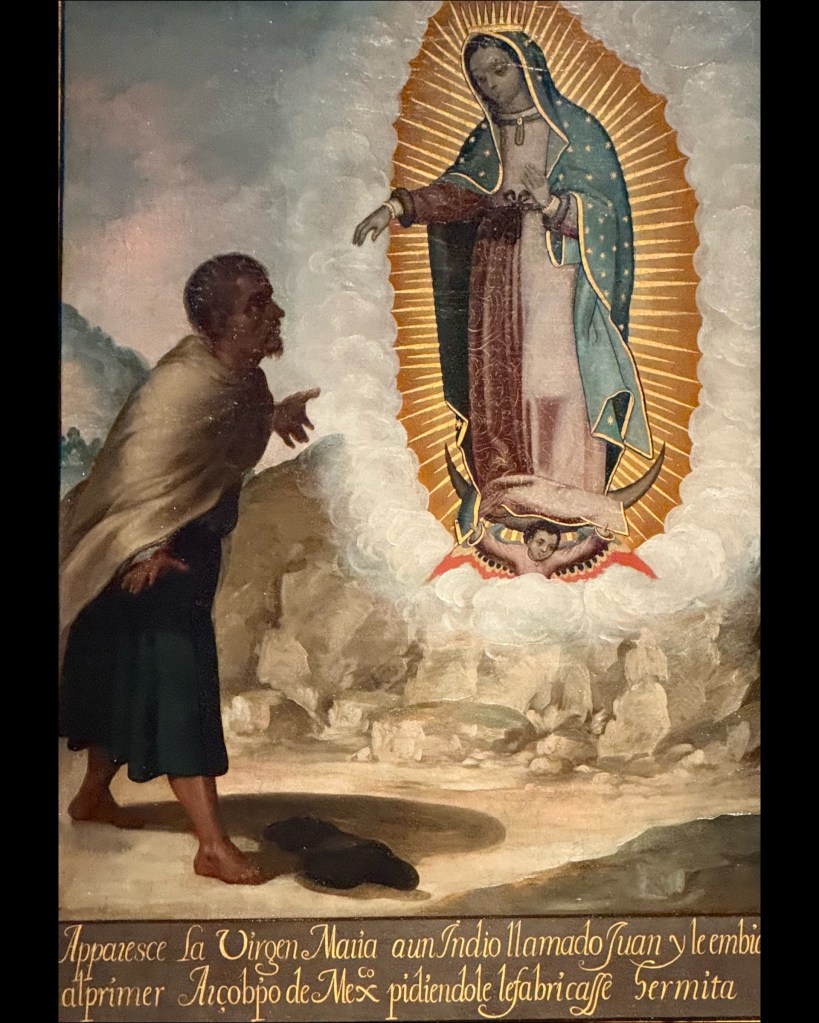
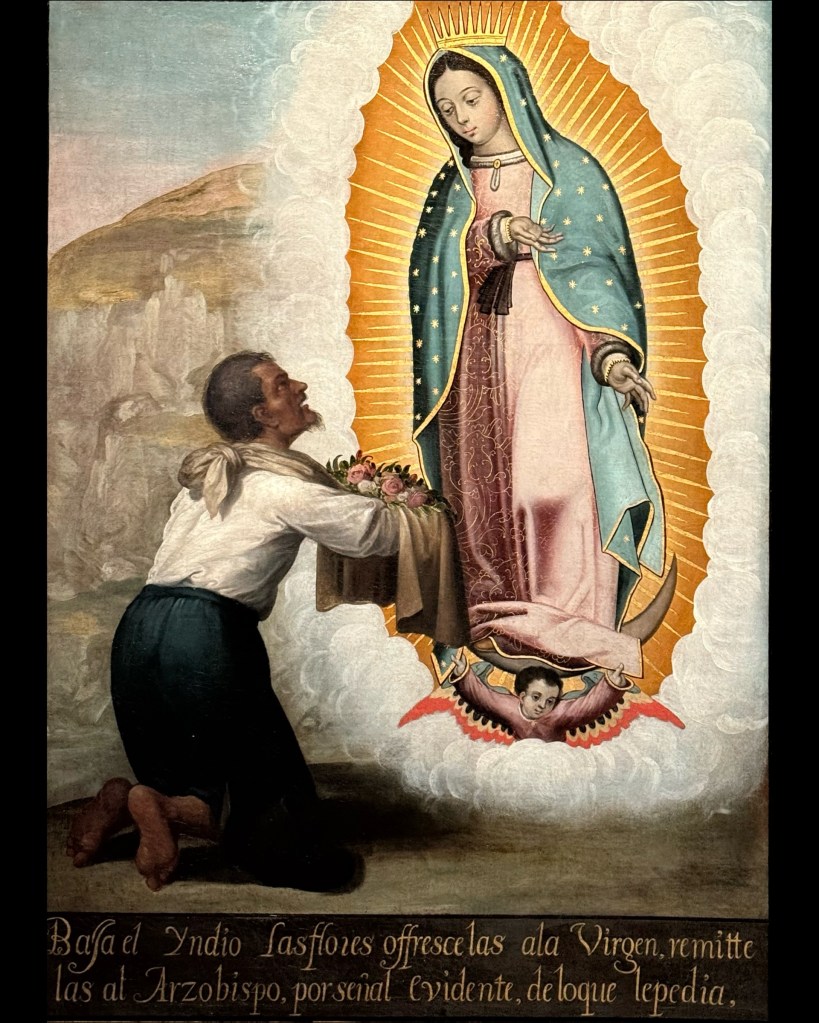
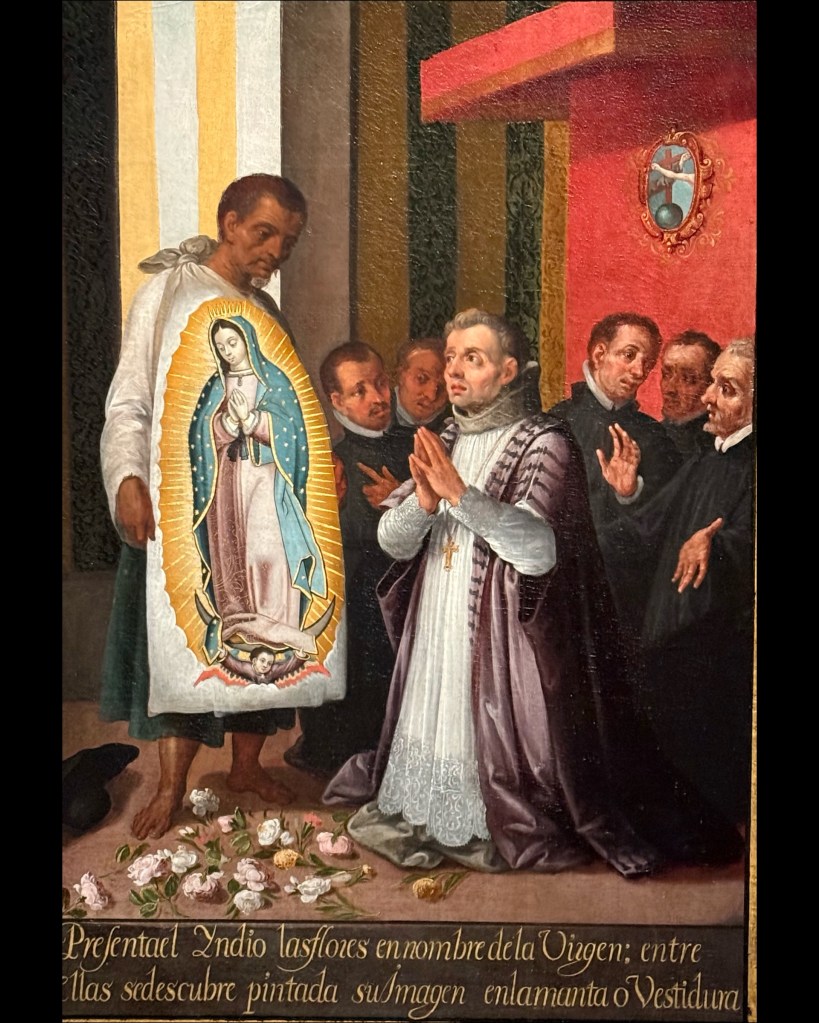
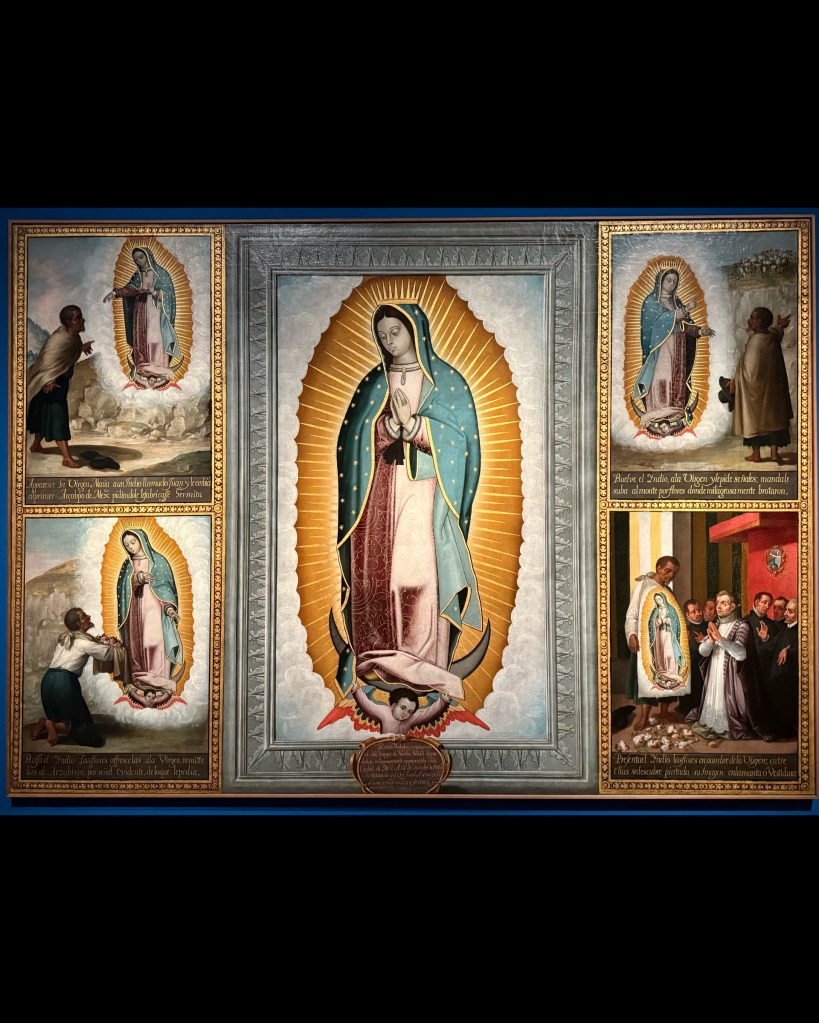
A new exhibition the Prado puts the spotlight on Guadalupe of Mexico and the first globalised Marian image. The dispatch of her “true likenesses” from New Spain to the metropolis bears witness to the intense relations between families and personalities on both sides of the Atlantic who shared desires, aspirations and sentiments. Through them, dense interpersonal, cultural, political, social and economic webs were woven that have now been lost, and which this exhibition seeks to restore.

The Virgin of Guadalupe was above all a revealed icon whose imprint made by roses on the unprecedented support of a cape of coarse cloth led theologians to compare the phenomenon with the Eucharist itself. For copies of the Holy Original to partake of its miraculous nature, they had to be extremely exact, obliging artists to apply all their skill.

This retable comes from the viceregal court in Mexico. The work of the finest American-born Hispanic painter in New Spain, it is the oldest preserved copy of the image of the Virgin of Guadalupe and the first to bring together all four scenes of the portent, which follow the narrative in Nahuatl published by Lasso de la Vega, Huei tlamahuizoltica [She marvellously appeared]. It is also a sign of the admiration felt in Mexico for this nun and her defence of the mystery of the Immaculate Conception.

🎨 José Juárez (1617-1661), Image and Apparitions of Our Lady of Guadalupe, 
1656.

Corpus Christi

Isidore Arredondo (1655-1702), The Exaltation of the Eucharist, late 17th century. Museo de Zamora.

The Feast of Corpus Christi was proposed by St. Thomas Aquinas to Pope Urban IV, in order to create a feast focused solely on the Holy Eucharist, emphasising the joy of the Eucharist being the Body and Blood, Soul and Divinity of Jesus Christ. Having recognized in 1264 the authenticity of the Eucharistic Miracle of Bolsena, the pontiff, then living in Orvieto, established the feast as a Solemnity and extended it to the whole Roman Catholic Church.

In this image of The Exaltation of the Eucharist by the Spanish court artist Isidoro Arredondo, we see a resplendent, typically Baroque sun-shaped monstrance triumphs in heavenly glory. It is raised by the playful momentum of naked cherubs and winged cherub heads, among which are displayed ears of wheat and a bunch of grapes and roses, a simple and direct allegory with clear references to the Eucharist and the Passion of Christ.

This image stemming from the Counter-Reformation’s response to the Protestant rejection of the doctrine of transubstantiation, displays a belligerent defence of the Eucharist and the real presence of Christ in the Catholic Mass.

Spain in London

The Embassy of Spain in London is the oldest bilateral embassy in the world, having been established by the Catholic monarch King Ferdinand in 1483 to cement the alliance between Spain and England against their common enemy France. Although the relationship has at times been tested, especially in the century that followed, the Embassy has had a profound impact on the fortunes of its host country. For a number of years Catherine of Aragon, the first wife of Henry VIII and mother of Mary the First, served as Spanish Ambassador to the court of Henry’s father.

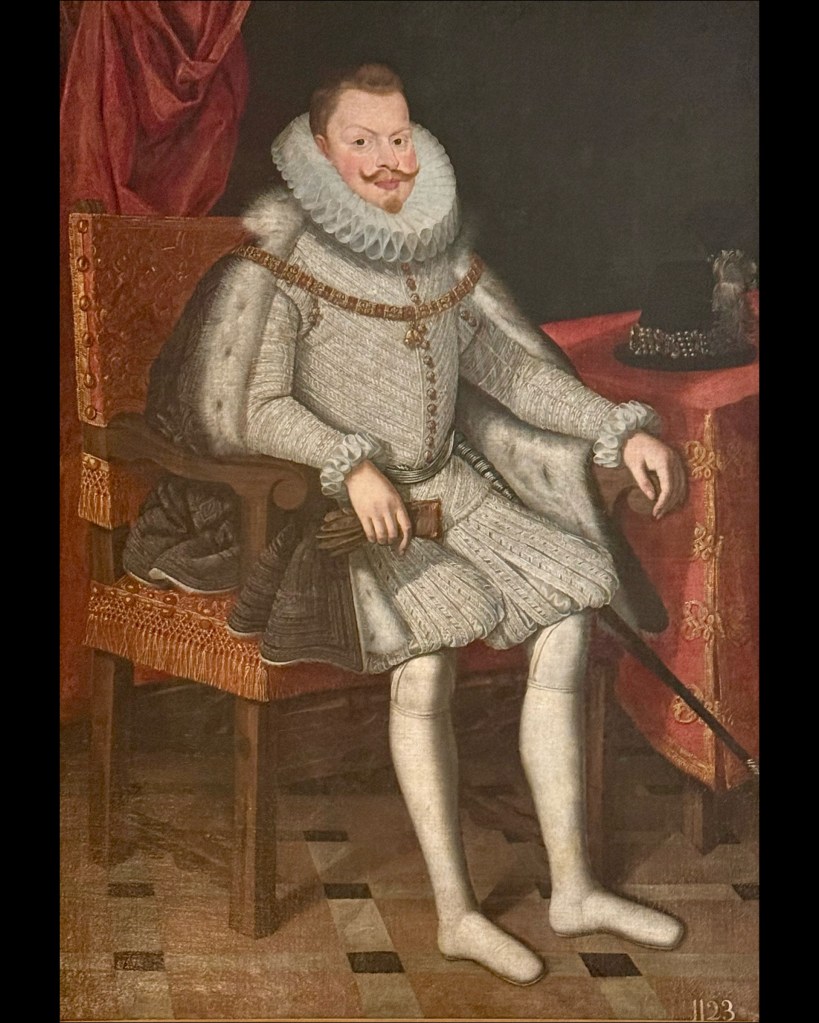
It is only fitting therefore that the Embassy should also be home to afine art collection, with a great many pieces on long term loan from The Prado and the Coleccion Reales. Among them are these royal Hapsburg images of Phillip III and his grandfather Charles V.

While the Holy Roman Emperor needs no introduction, Phillip III is one of those neglected and not well understood Kings, following in the wake of his extraordinary father Phillip II and followed by his son Phillip IV who was immortalised by brush of Velázquez. 

The portrait of Phillip III shown here is by the court painter Bartolomeo Gonález (1564-1627), and portrays Phillip as very much the erudite statesman – a fitting portrayal for a King who’s reign finally saw Spain and England set aside decades of animosity with the signing of the Peace Treaty of London in 1604.

Ember Days

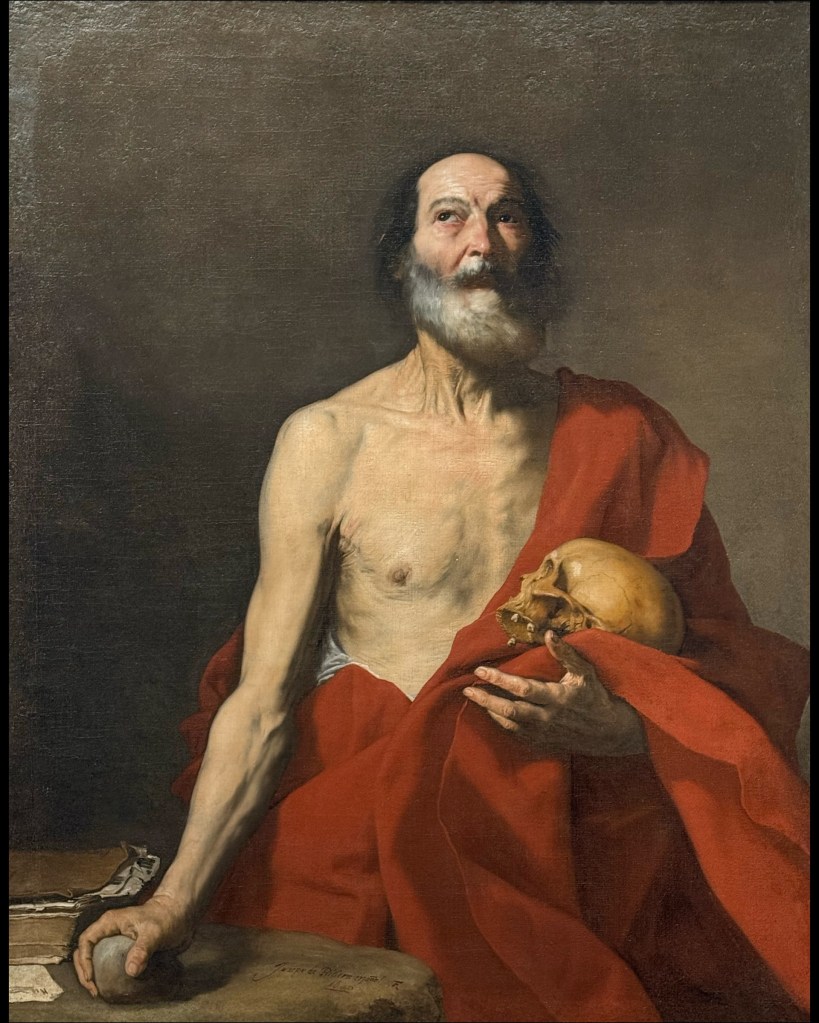
Jusepe de Ribera (1591-1652), Saint Jerome, 1640.
Fogg Museum, Harvard University, Cambridge MA.

The week after Pentecost contains three ‘ember days’ when many catholics undertake fasts and penance. This ‘summer lent’ has a long tradition in the Church and was known to Saint Jerome, the saint in this image by Jusepe de Ribera.

Ribera depicted Saint Jerome, the early Christian ascetic, priest, and translator of the Bible, numerous times during his career. With harsh realism, Ribera stresses the saint’s role in propagating the sacrament of penance. Head uplifted, Saint Jerome grasps the stone with which he would violently beat his breast, while his left arm cradles a skull, representing the transience of human existence. 

Ribera highlights the physical nature of this penance by contrasting the muscular tension in the saint’s right arm with the worn and wrinkled skin elsewhere on his aged body. The voluminous folds of his cardinal’s robe, rendered in deep chiaroscuro, and the crisp pages of the book to his right — a reference to his scholarly pursuits —further emphasize the frail state of his earthly body.

Pentecost

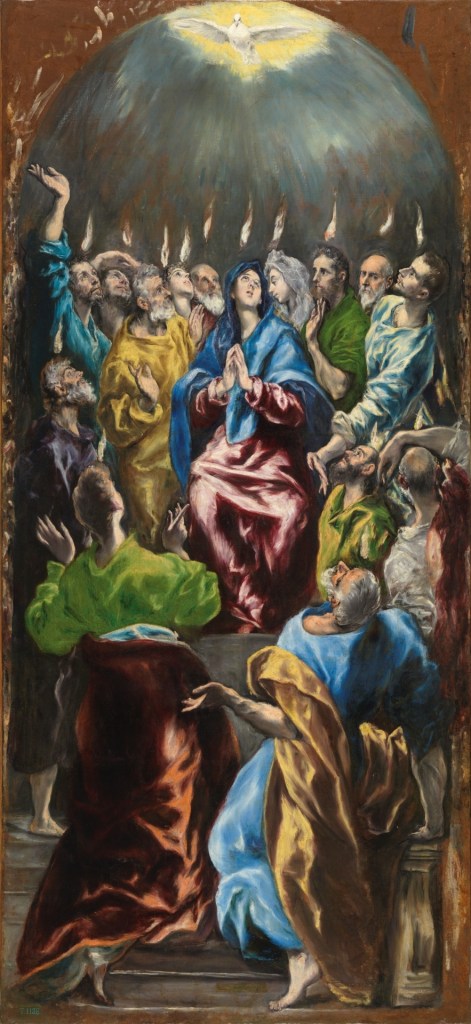
El Greco, Domenikos Theotokopoulos, (1541 – 1614), Pentecost, c. 1600. The Prado.

On this Pentecost Sunday I thought I’d conclude our El Greco week with this magnificent canvas from collection of the Prado Museum.

This work depicts the moment when the Holy Ghost, in the form of flames, rests on the Virgin and the Apostles on Pentecost day in Jerusalem, as is told in the book of Acts (2: 1-5). The bald, bearded Apostle who looks out at the viewer from the right of the canvas has been identified as a self-portrait, or as a portrait of the artist´s friend, Antonio de Covarrubias.

This work was painted as part of a 1596 commission to paint the high altar of the Colegio de la Encarnación (Madrid), an Augustinian seminary better known by the name of its founder, Doña María de Córdoba y Aragón (1539-1593). The signature is on the second step, in Greek letters. It was redone during an old restoration.

El Greco painted the scenes in small spaces, emphasizing the vertical format, and bathing them in a ghostly light that enhances the unreality of the figures, which are arranged in a very marked foreshortening and have very expressive features. The colours-cold, intense and contrasting- are applied very loosely over powerful anatomical constructions, and are perfect examples of El Greco’ s highly personal style in the final years of his career.

El Greco’s San Ildefonso 

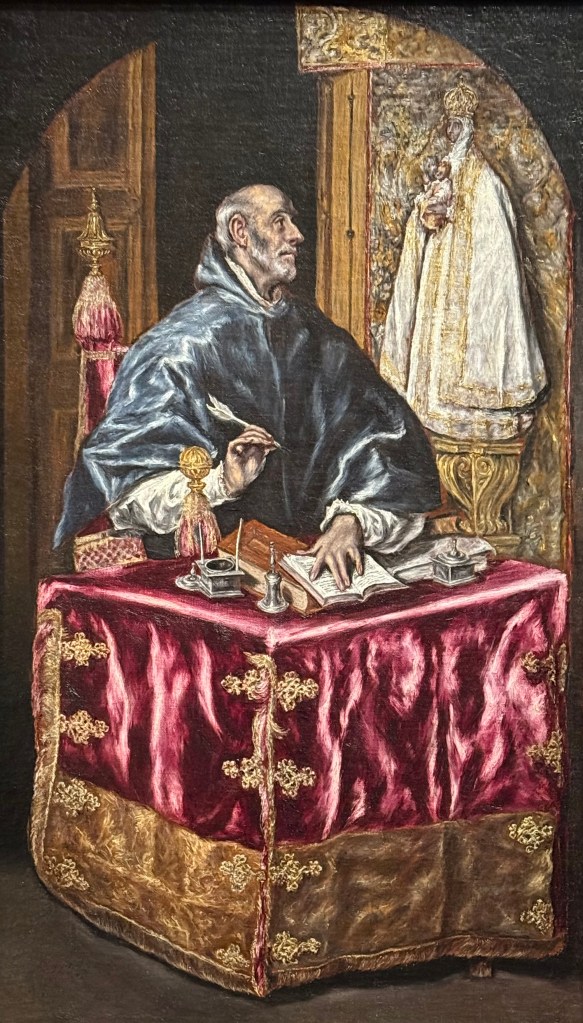
El Greco (Domenikos Theotokopoulos), Saint Ildefonso, c. 1603/1614. National Gallery of Art, Washington DC.

Ildefonso was appointed archbishop of Toledo in 657 and later became that city’s patron saint. He was especially famed for his book defending the purity of the Virgin, which he was said to have written at her dictation.

El Greco represented the saint in a richly decorated room, seated at a writing table furnished with costly silver desk ornaments consistent with the style of the artist’s own time. The contemporary setting notwithstanding, an otherworldly aura pervades the room as the saint pauses in his writing and, as though awaiting the next word, gazes attentively at the source of his inspiration, a statuette of the Madonna. The combination of strangely compacted space, the chalky highlights that play over the saint’s sleeves and the velvet tablecover, and, not least, Ildefonso’s fervent expression, remove the scene to a spiritual realm.

El Greco’s image of the Virgin resembles an actual wooden figure that Ildefonso is said to have kept in his oratory until it was given by him to the church of the Hospital of Charity in the small Spanish town of Illescas, near Toledo. The statuette is preserved there today together with El Greco’s larger version of Saint Ildefonso.

Laocoön

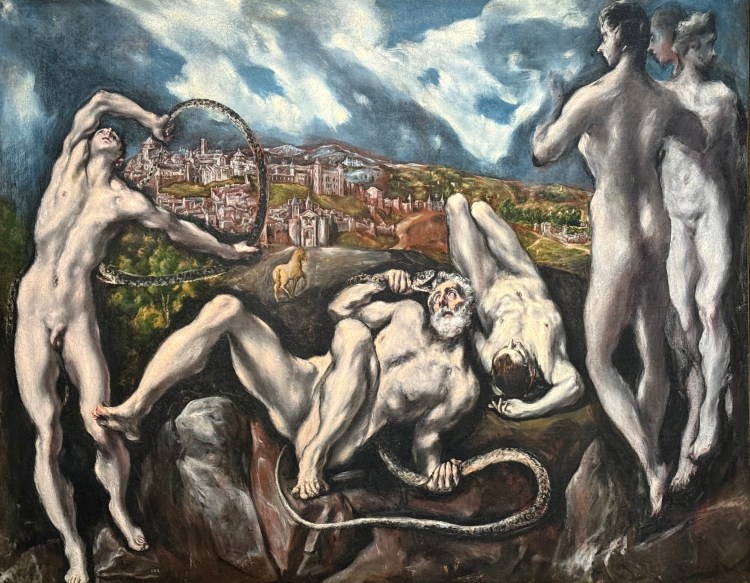
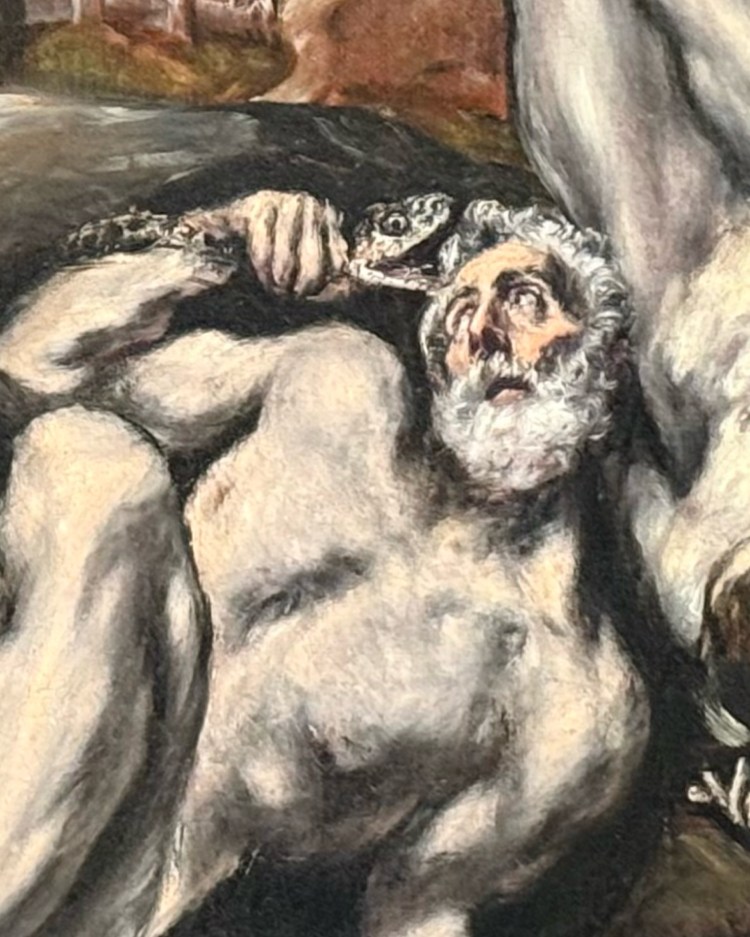
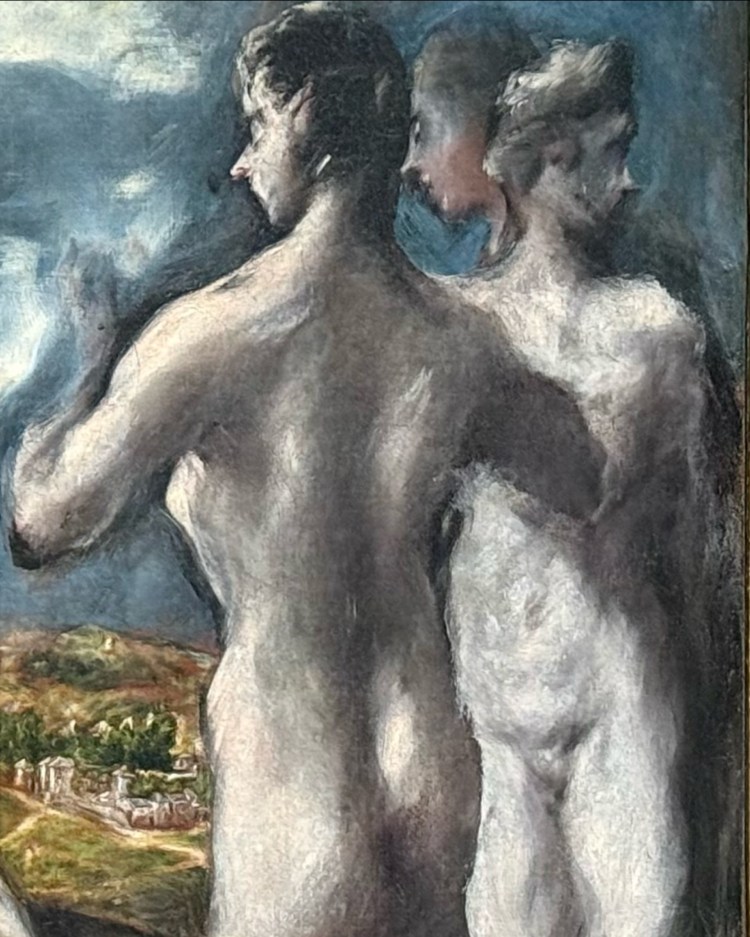
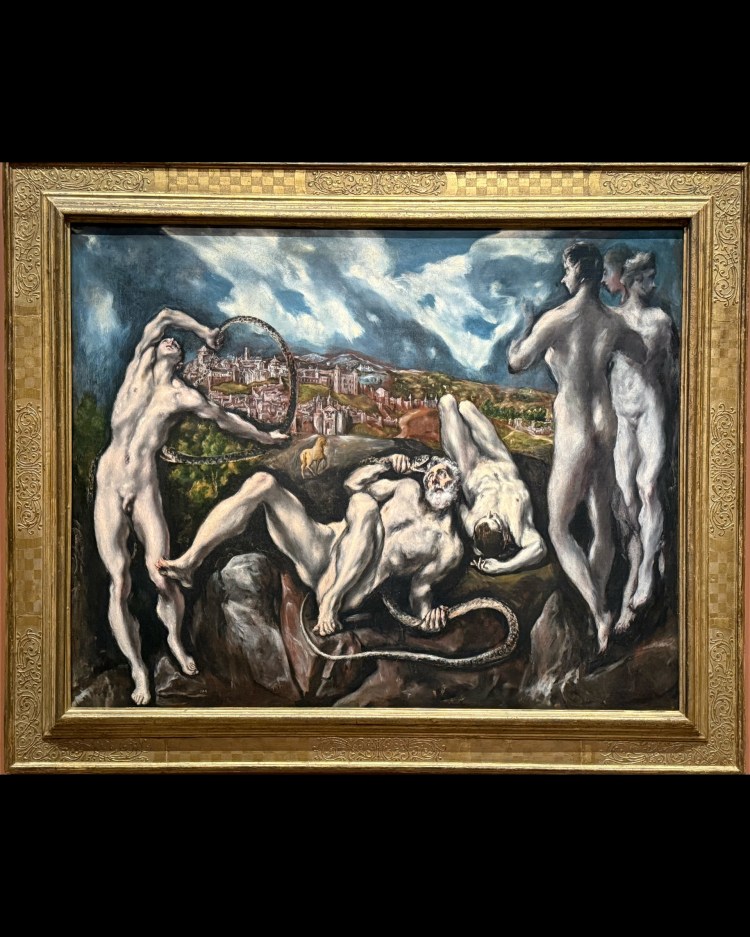
During the Trojan War, the priest Laocoön angered the Greek gods, who sent snakes to kill him and his two sons. The legend became popular after a monumental, ancient marble sculpture of Laocoön and his sons was unearthed in Rome in 1506.

Laocoön is El Greco’s only known mythological painting. He set the scene not in Greece, but in the city of Toledo, Spain, his adopted home. El Greco felt that art should engage the mind and not just copy nature. He used elongated, twisting figures, distorted space, and clashing colours to express emotions vividly.

🎨 El Greco (Domenikos Theotokopoulos, 1541-1614),
Laocoön, c. 1610/1614. National Gallery of Art, Washington DC.