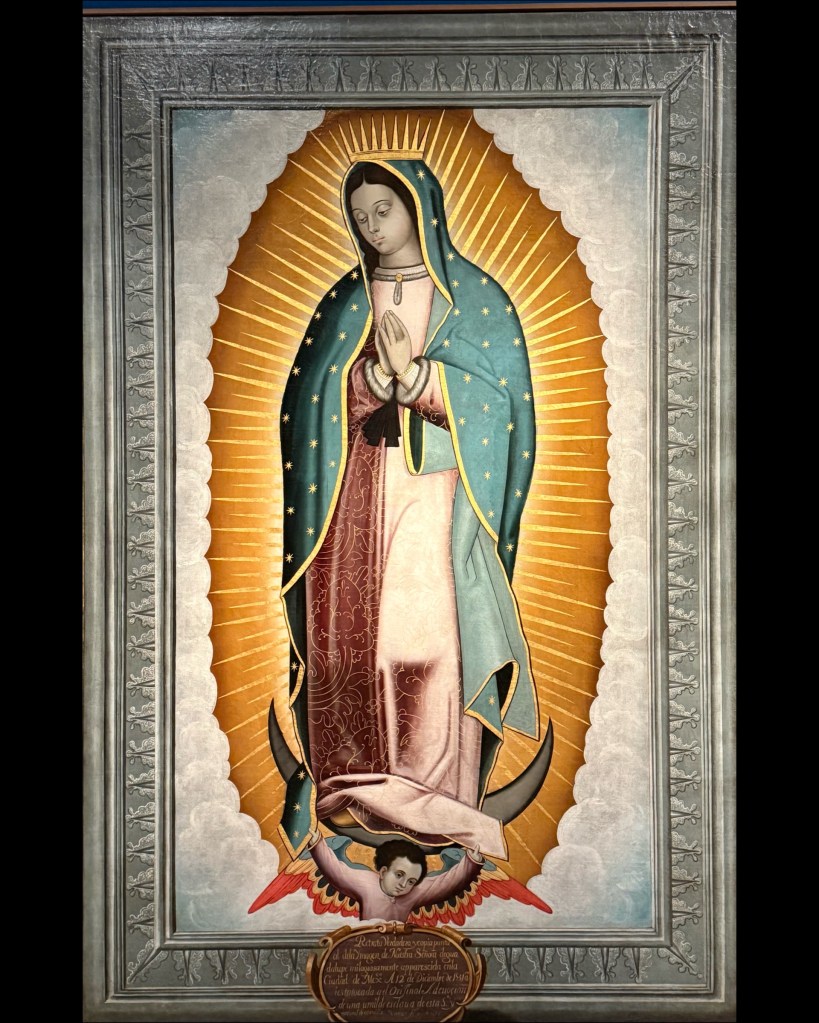
A new exhibition the Prado puts the spotlight on Guadalupe of Mexico and the first globalised Marian image. The dispatch of her “true likenesses” from New Spain to the metropolis bears witness to the intense relations between families and personalities on both sides of the Atlantic who shared desires, aspirations and sentiments. Through them, dense interpersonal, cultural, political, social and economic webs were woven that have now been lost, and which this exhibition seeks to restore.
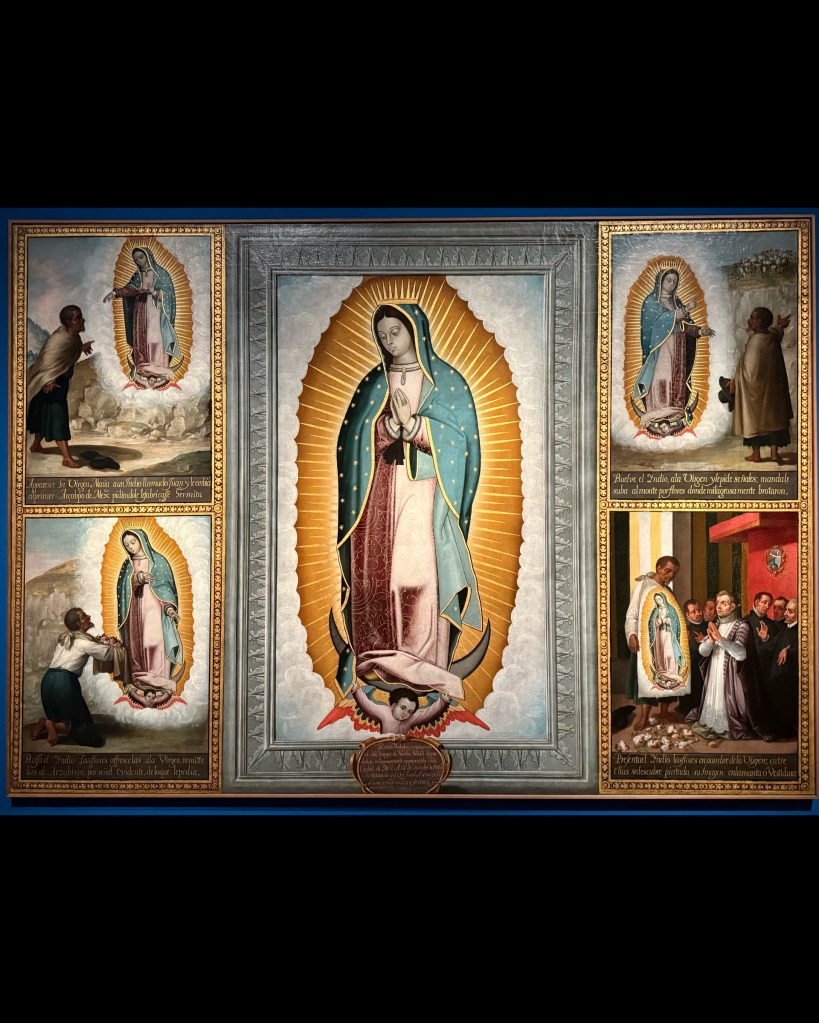
The Virgin of Guadalupe was above all a revealed icon whose imprint made by roses on the unprecedented support of a cape of coarse cloth led theologians to compare the phenomenon with the Eucharist itself. For copies of the Holy Original to partake of its miraculous nature, they had to be extremely exact, obliging artists to apply all their skill.
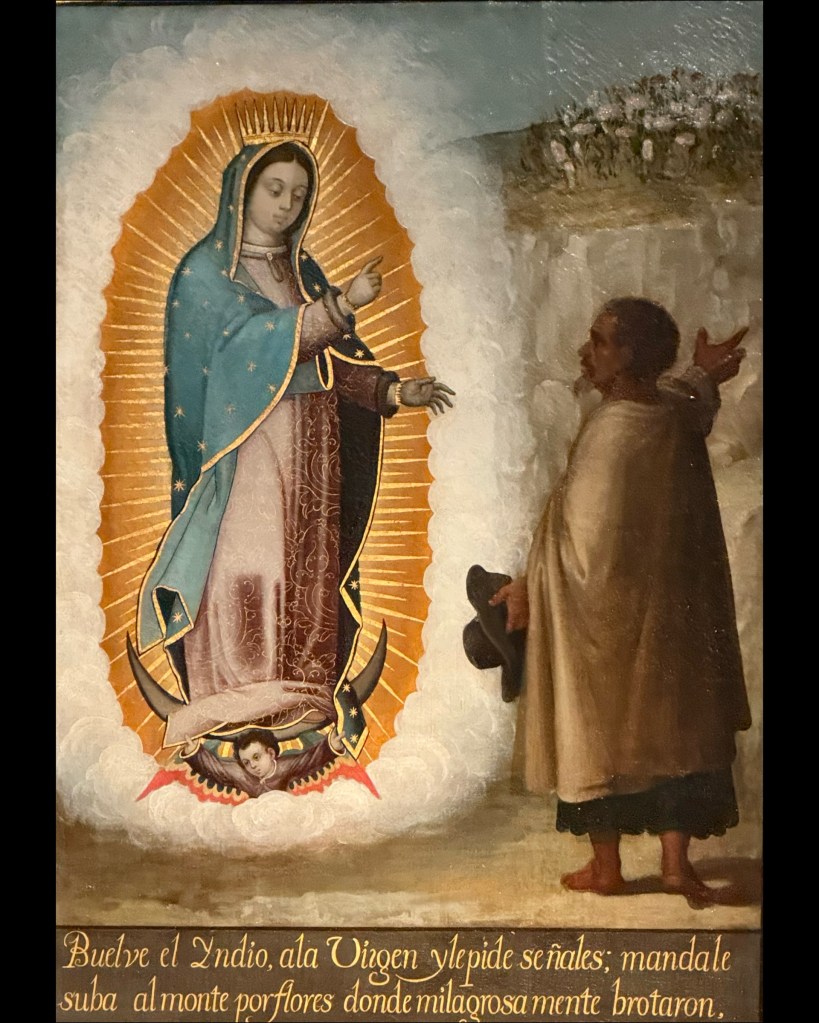
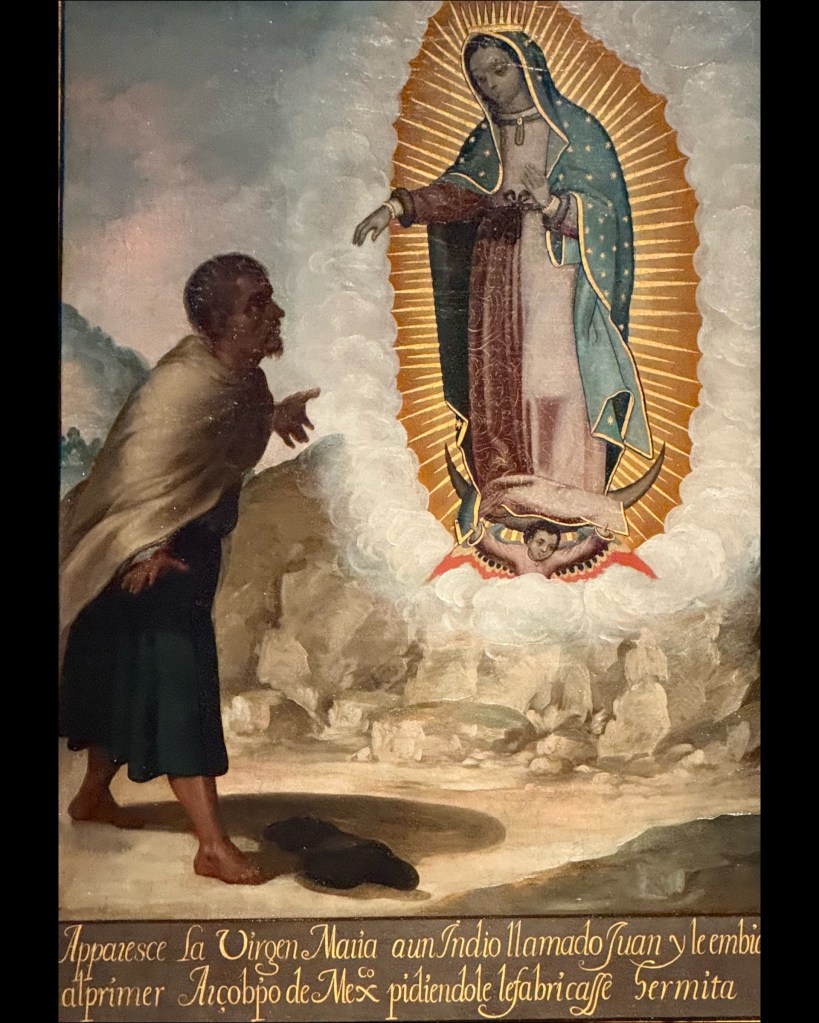
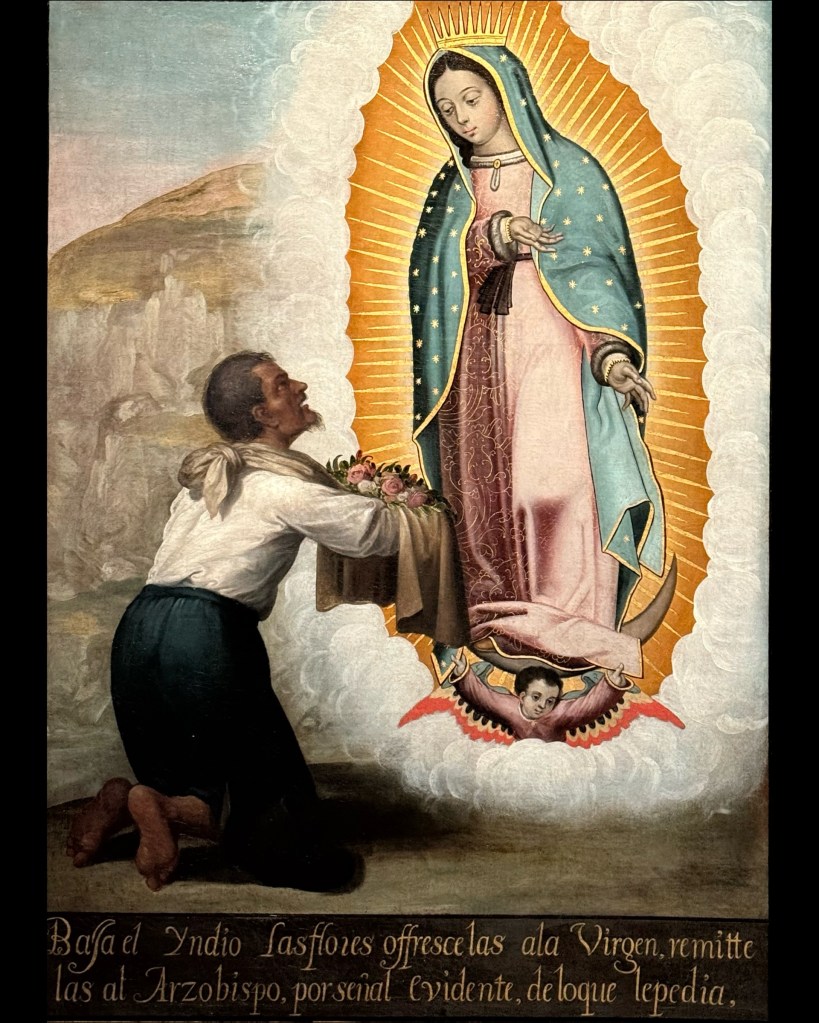
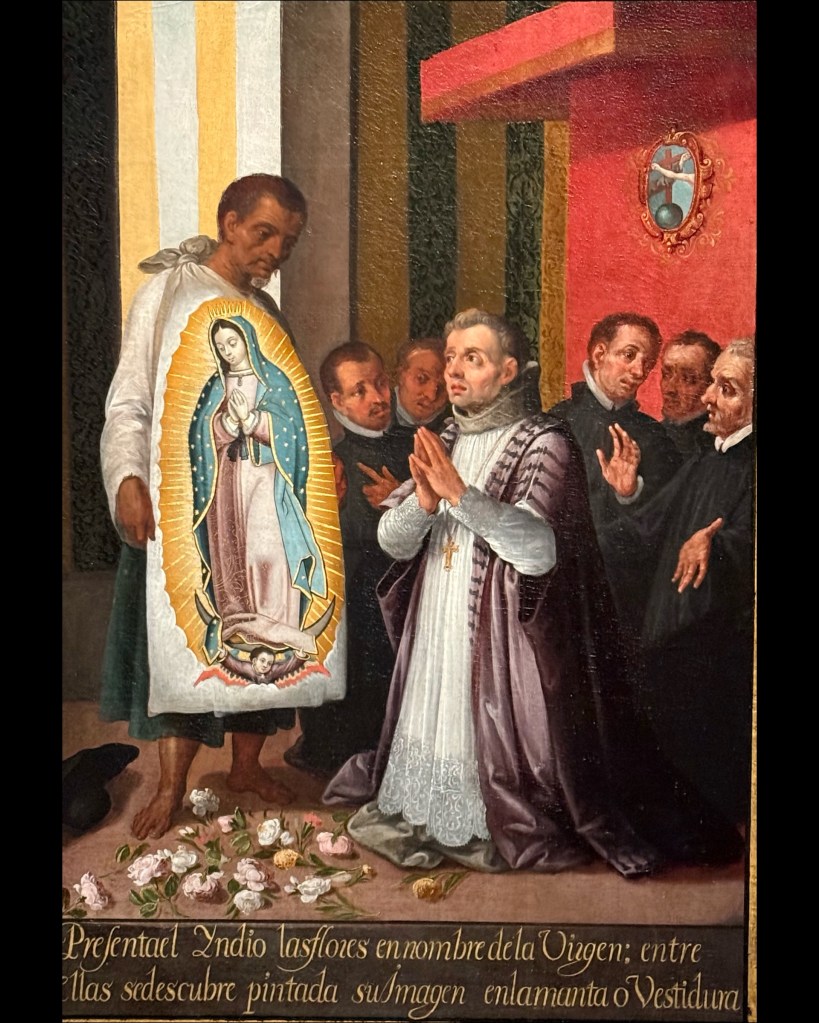
This retable comes from the viceregal court in Mexico. The work of the finest American-born Hispanic painter in New Spain, it is the oldest preserved copy of the image of the Virgin of Guadalupe and the first to bring together all four scenes of the portent, which follow the narrative in Nahuatl published by Lasso de la Vega, Huei tlamahuizoltica [She marvellously appeared]. It is also a sign of the admiration felt in Mexico for this nun and her defence of the mystery of the Immaculate Conception.
🎨 José Juárez (1617-1661), Image and Apparitions of Our Lady of Guadalupe,
1656.
 The Arts of Golden Age Spain and the Hispanic World