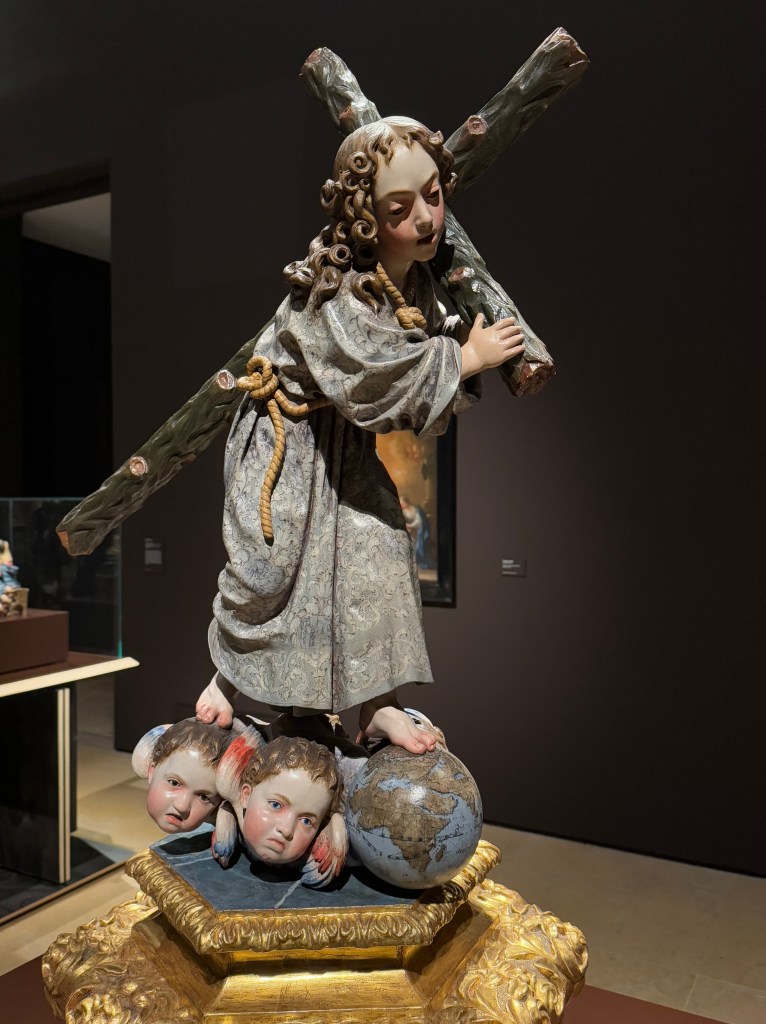
To celebrate ‘La Día de Andalucia’ I am highlighting works by Luisa Roldán (1652 – 1706). Known also as La Roldana, Luisa is the earliest woman sculptor documented in Spain and recognised for being one of the few women artists to have maintained a studio outside the convents in Golden Age Spain.
These works, all currently in a remarkable show at @museo.escultura in Valladolid, demonstrate the breadth of her skill and achievements. Spanning her first works in the studio of her father, Pedro Roldán, to the small terracotta pieces produced for refined Baroque tastes of the Court in Madrid.
Although Roldán became the Escultor de Cámara, or Court Sculptor, to the Habsburg King Charles II, she struggled financially. Like many artists of her time she died poor, signing a declaration of poverty shortly before her death. On the day of her death, Roldan was given the title of “Academician Merit” from the Accademia di San Luca in Rome.
Luisa influenced several women artists in Seville, Cadiz and Madrid through her sculptures and artistic innovation. Women artists at the time were seen as belonging to a “private” sphere and men to a “public” sphere. When Roldan created her sculptures she made her work public and changed the way art was perceived in the 1600s.
 The Arts of Golden Age Spain and the Hispanic World